



When you purchase through our links, we may earn a commission at no extra cost to you. As an Amazon Associate, DreamSlumber earns from qualifying purchases. Learn more.
Have you ever wondered what’s hiding in the one piece of bedding you can’t just toss in the wash? This is a mattress topper that adds softness, comfort and extra support to your bed. The topper is usually made of plush memory foam, supportive latex, or fluffy down/feather fill, elevating your bed’s comfort. That is why learning how to clean a mattress topper is important to keep your slumber sanctuary fresh and hygienic.
The first and foremost rule is to always use a gentle washing solution and low-moisture technique. Additionally, you must also check the care label, as cleaning methods may vary by material. So, scroll down to learn the right way to refresh your topper and keep it feeling brand new.
Identify Your Topper and Read the Care Label
You must understand your topper’s construction layers and the material used before finalising a cleaning method. This is important because using the wrong cleaning method may cause long-term and irreversible damage. To truly answer the question, can you wash a mattress topper in the washing machine? We recommend you read the care label instructions and follow them to understand the manufacturer’s cleaning requirements. Follow these additional tips:
Know Your Material At A Glance (Spot-Clean vs Machine-wash)
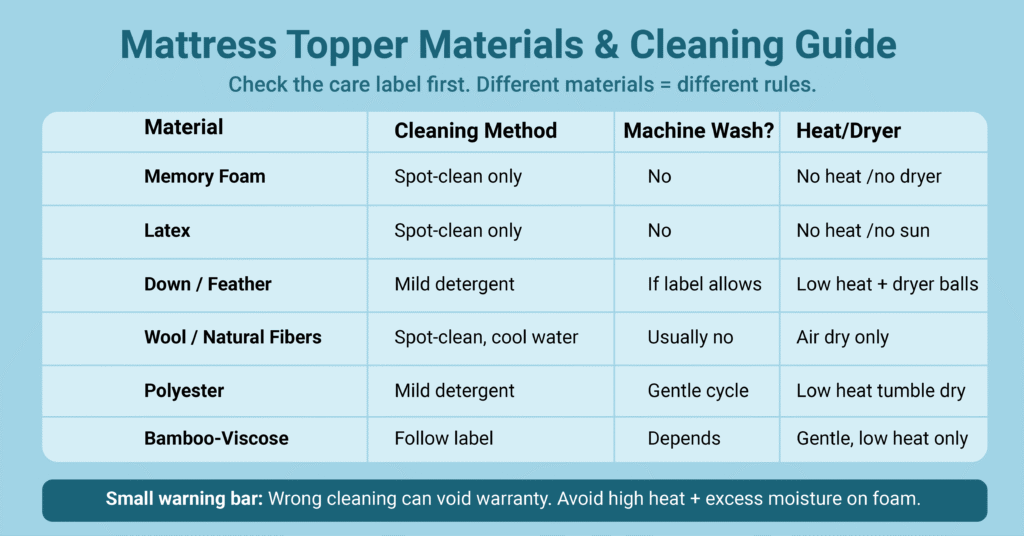
Mattress toppers fall into two groups. Some are safe for machine washing. Others allow spot cleaning only. The table below lists different materials of the topper along with their cleaning methods and safety instructions:
| Topper Material | Cleaning Method | Washer/Dryer Safety |
| Memory Foam | Spot-clean only | Do not machine wash or dry. |
| Latex | Spot-clean only | Do not machine wash or dry. |
| Down/Feather | Machine washable (check label) | Tumble dry with dryer balls low heat. |
| Wool | Spot-clean only | Do not machine wash or dry. |
| Polyester | Machine washable (check label) | Tumble dry on low heat. |
| Bamboo-Viscose | Varies (check label) | Some can be machine-washed on a gentle cycle. |
Warranty Red Flags:
Read your topper’s warranty policy first. Avoid using high heat for cleaning materials such as Tempur-Pedic’s TEMPUR-material. A wrong cleaning method may expose your topper to moisture or humidity, a red flag for some manufacturers.
Covers vs Cores: What Can Actually Go in The Washer?
Look for mattress toppers that come with a removable zip cover. This makes the cleaning and maintenance process easy. This is because most of these covers can be machine-washed, even if the topper’s core cannot be washed. Before giving it for laundry, read the care label on the cover for specific instructions. By washing it regularly, you also reduce the growth of dust mite allergens in the topper.
Prep Your Space and Tools Before Cleaning
You first need to clear out a space and keep your cleaning tools handy before starting the cleaning process. For this, you need a space big enough to place the mattress topper on the floor horizontally. This gives you enough access for deep cleaning. To dry the mattress and air it out completely, make sure the room is well-ventilated with a window. Alternatively, you can also place a fan or dehumidifier strategically to dry it out. By following these simple measures, your mattress topper cleaning process becomes much more efficient.
What You’ll Need and Why Each Item Matters
A quick 10 minute setup and supplies checklist make the full process easier. To get started, you will need the following equipment:
- Upholstery Vacuum Attachment: This comes with your vacuum cleaner and removes fine debris like dust, pet dander, hair, and more.
- Baking Soda: This works as a natural deodorizer by absorbing moisture and minimizing odors.
- White Vinegar Solution: Create this by mixing an equal amount of white vinegar with water and storing it in a spray bottle.
- Mild Detergent: This works best for spot cleaning stains without harming the topper’s fabric.
- Enzyme Cleaner for Urine: This is an effective solution that breaks down the organic components of the stain and also reduces the stench.
- Microfiber Cloths and a Spray Bottle: These work as gentle cleaning methods for applying the solution and blotting the tough stains.
Safety Note: Do not use harsh chemicals like bleaching solutions as they may discolour the fabric. Such chemicals may also break down the materials in the foam mattress toppers.
Routine Refresh: Vacuum, Deodorize, and Air
To keep your mattress topper fresh and durable, you must create a cleaning schedule. You can look for toppers that come with washable zip covers. You can wash them regularly with bedsheets to minimize the buildup of dirt and allergens. Here are a few important tips for regular cleaning:
Weekly: Fast Dust/Allergen Lift
Every week, allocate about 15 minutes to refresh your mattress topper. You can use an upholstery vacuum and use it over the entire surface to lift the dust mites and dead skin cells. To make it completely free from allergens, air the topper out for at least an hour before using it.
Monthly/Quarterly: Baking Soda Deodorize Cycle
You can use the baking soda method every month to remove the unpleasant smell of body sweat or pet accidents. Follow these steps on how to deodorize a mattress topper with baking soda:
- Start by vacuuming both sides of the topper.
- Sprinkle a layer of baking soda lightly over the entire surface.
- Let it sit for at least eight hours to dissipate any odors.
- Vacuum up all the baking soda.
- Avoid overusing the powder, as it can clog the vacuum filters.
Remove Stains Safely: Proven Methods By Stain Type
In case of spills or pet accidents, you must act quickly and use the right cleaning method. The right method depends on the difficulty level of the stain and the material of the topper. Most of them require gentle blotting of the affected area with the least amount of moisture to keep the stain from reaching the topper’s core. This works for most of the minor stains. However, tougher ones may need regular cleaning.
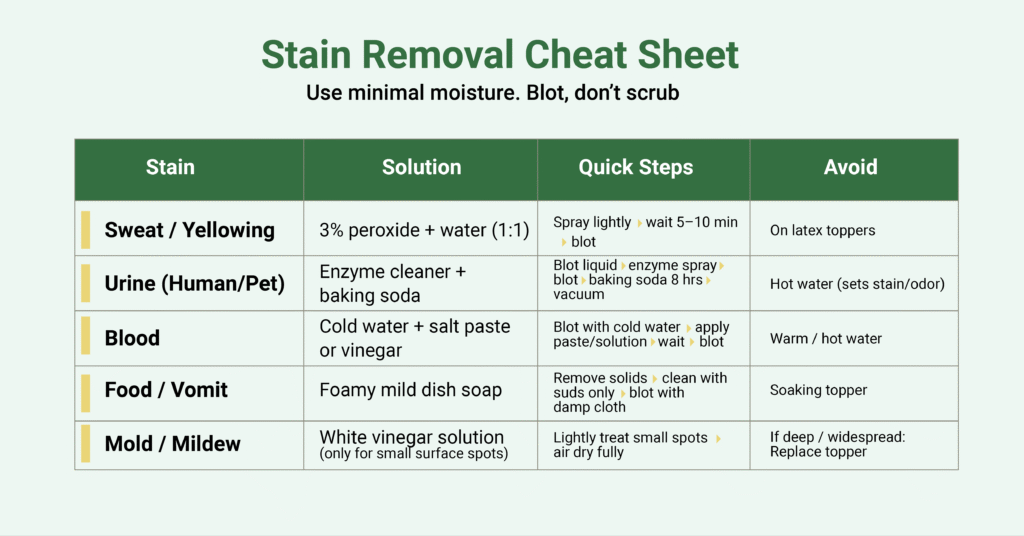
The table below compares different stains against recommended cleaning steps and other considerations:
| Stain Type | Cleaning Solution | Steps | What to Avoid |
| Yellowing/Sweat | 3% Hydrogen Peroxide & Water (1:1 ratio) | 1. Lightly spray the solution on the stain. 2. Let it sit for 5-10 minutes. 3. Blot with a clean and damp cloth. | Avoid using latex toppers |
| Urine | Enzyme cleaner, then baking soda | 1. Blot to absorb as much liquid as possible. 2. Spray with an enzyme cleaner and let it sit for 15 minutes. 3. Blot dry, then cover with baking soda for 8 hours before vacuuming. | Using hot water can set the stain and odors. |
| Blood | Cold water, then a paste of salt and cold water or a solution of white vinegar | 1. Immediately blot with a cloth soaked in cold water. 2. Apply the salt paste or vinegar solution and let it sit for 10-30 minutes. 3. Blot away with a damp cloth. | Using warm or hot water can cause blood proteins to set. |
| Food/Vomit | Foamymild dish soap and water | 1. Scrape off any solid residue. 2. Use only the suds from the soap mixture to clean lightly. 3. “Rinse” by blotting with a moist cloth. | Soaking the topper with water or a cleaning solution. |
Sweat and Yellowing: Light Oxidizers and Deodorizing
With regular use, your mattress topper can develop a yellowish tinge due to the buildup of sweat and body oils. To remove this:
- Create a solution of one part 3 percent hydrogen peroxide and one part water.
- Store it and spray it lightly on the surface to lift the stains.
However, you must apply it with caution as it can show some bleaching effect. If you have natural latex toppers, skip this method completely.
Urine (Human/Pet): Enzyme First, Then Baking Soda
Follow these steps on how to remove urine from a mattress topper:
- First, blot the affected area to eliminate as much liquid as possible.
- Then, use a commercial enzyme cleaner to break down the proteins in the stain and neutralize the odor.
- After cleaning, apply the baking soda solution to dry out the remaining moisture and bad smell.
Blood, Vomit, Food: Cold Water and Mild Detergent Foam
Stains of blood, vomit, and food require a sanitisation step in addition to cleaning the mattress. Here are the steps on how to sanitize a mattress topper without bleach:
- Start with cold water, as hot water can set the stain permanently.
- Scrub off any solids, then dab the area with a cloth and a foamy mixture of mild dish soap and water.
- Continue by rinsing and blotting simultaneously with a clean and damp cloth to remove the soap completely.
Mold/Mildew: When to Attempt Spot Treatment vs. Replace
Mold or mildew may grow on organic and natural materials over long-term use. The small and light spots can be treated with a white vinegar solution. If the stains have penetrated the core of the topper, consider replacing it for your health safety.
Deep Clean by Material: Do’s and Don’ts
Cleaning your mattress topper regularly makes sure it stays hygienic for your nighttime rest. However, your care schedule must also include a deep cleaning day every month to remove any debris or organic matter buildup. For this, you must know the right method according to your mattress material, as listed in the table below:
| Material | Do’s | Don’ts |
| Memory Foam & Polyfoam | Spot clean with mild soap or vinegar solution; blot gently. | No machine wash/steam/high heat. |
| Latex | Gentle spot clean; always air dry away from direct heat. | No direct sun and avoid peroxide. |
| Down/Feather | Machine wash only if the label permits | Don’t use a top-loading machine with an agitator. |
| Wool/Natural Fibers | Spot clean with cool water and a wool detergent. | Avoid minimal agitation and never use hot water. |
Memory Foam and Polyfoam
The dos and don’ts on how to clean a memory foam mattress topper are:
- Do: Spot clean with a mild detergent or a solution of one part vinegar to two parts water. Avoid rubbing harshly.
- Don’t: Avoid washing it in a machine or steam cleaning. These processes are harsh on the material and can break it down. Also, avoid high heat from sources like hair dryers or electric blankets.
Latex
The dos and don’ts for how to clean a latex mattress topper safely are:
- Do: Spot clean the affected part using a gentle dish cleaning soap and water solution.
- Don’t: Avoid keeping it directly under the sunlight as UV rays can degrade the material and make it brittle. Also, skip using a hydrogen peroxide mixture to avoid any bleaching damage in the fabric.
Down/Feather
The dos and don’ts for how to wash a down or feather mattress topper are:
- Do: Check the care label to see if it is a machine washable topper. If it is, use a large-capacity machine on a delicate cycle with mild detergent.
- Don’t: If your topper doesn’t have enough room to move freely in the machine, it won’t get clean and could be damaged. When drying, always use a low heat setting and add a few dryer balls. This will fluff up the feathers and prevent them from clumping together.
Wool and Other Natural Fibers
To wash wool and natural fibers, the safety tips are:
- Do: Spot clean using a wool-safe detergent and dilute it in cool water.
- Don’t: Avoid rubbing the materials or using aggressive washing, as it may shrink the fibers. For wool toppers, dry them out in the open air as they are prone to mildew growth.
Drying Without Damage: How to Speed It Up Safely
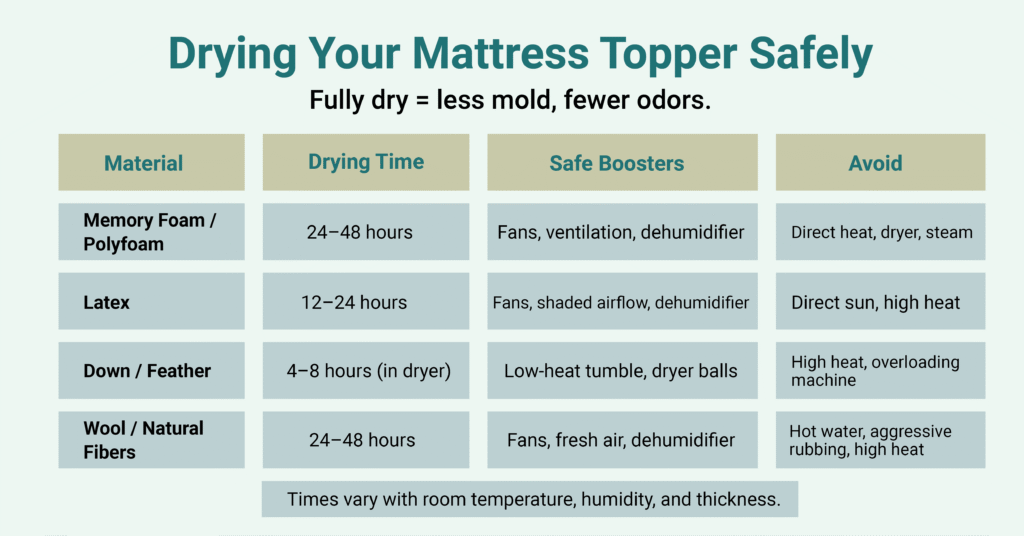
To get a hygienic topper surface, drying it out after washing is very important. Trapped moisture in foam or natural materials can accelerate mold and mildew growth. To check if it is dry, notice if it seems heavier than usual and look for any musty smell.
The table below lists different mattress topper materials and the average time taken by each for drying, for your reference:
| Material | Drying Window | Safe Accelerators |
| Memory Foam/Polyfoam | 24-48 hours | Fans, dehumidifier, good ventilation |
| Latex | 12-24 hours | Fans, dehumidifier, shaded area with good airflow |
| Down/Feather | 4-8 hours (in dryer) | Low-heat tumble drying with dryer balls |
| Wool | 24-48 hours | Fans, dehumidifier, good ventilation |
Air-Dry Methods That Work
Air-drying under the direct sun works as one of the affordable and safe options for natural disinfection. You can also make the process faster by putting the mattress in a cross-ventilated room. For this, open all the windows and use fans to circulate the air, also run a dehumidifier to dry.
Sun and Heat: When It Helps and When It Harms
Check if your mattress topper’s material can withstand the direct heat from the sun. UV rays can damage the latex toppers and make them lose their elasticity. However, for all other materials, keeping them out in the sun for a short period is perfectly safe.
Sanitize and Control Allergens and Odors
If you are a sensitive sleeper, ensure that the mattress topper stays free from dust mites and pet dander. These small but harmful particles may trigger your allergies, making restful sleep a distant dream. Let us discuss the measures you can take to alleviate them:
Dust Mites 101 and Why Dry, Clean Surfaces Matter
Dust mites are microscopic creatures that grow in warm, humid environments and feed on dead skin cells. According to the American Academy of Allergy, Asthma, and Immunology (AAAAI), these common pests are a major trigger for allergies and asthma. By keeping your mattress topper dry and clean, you restrict them from multiplying. You must wash the bedding in hot water (at least 130°F or 54.4°C) every week to completely eliminate them.
Sanitizing Safely: What to Skip on Foam and Safer Alternatives
Using harsh chemicals and bleaching may degrade the fabric of the topper over time. Additionally, avoid steam cleaning, as heat and moisture can lead to mold growth inside the layers of the topper. Instead, use a gentle rinse of white vinegar solution, which kills bacteria and microbes on the surface. Air out method in the sun also works as a natural disinfectant, but avoid it for latex topper cleaning. You can also use an upholstery vacuum to physically remove the debris without damaging the material.
Protect and Maintain: Cadence, Covers, and When To Replace
Regular maintenance of your mattress topper requires creating a cleaning cadence, using mattress covers, and replacing damaged toppers. Consider these tips to maintain the longevity of your topper:
Cleaning Schedule:
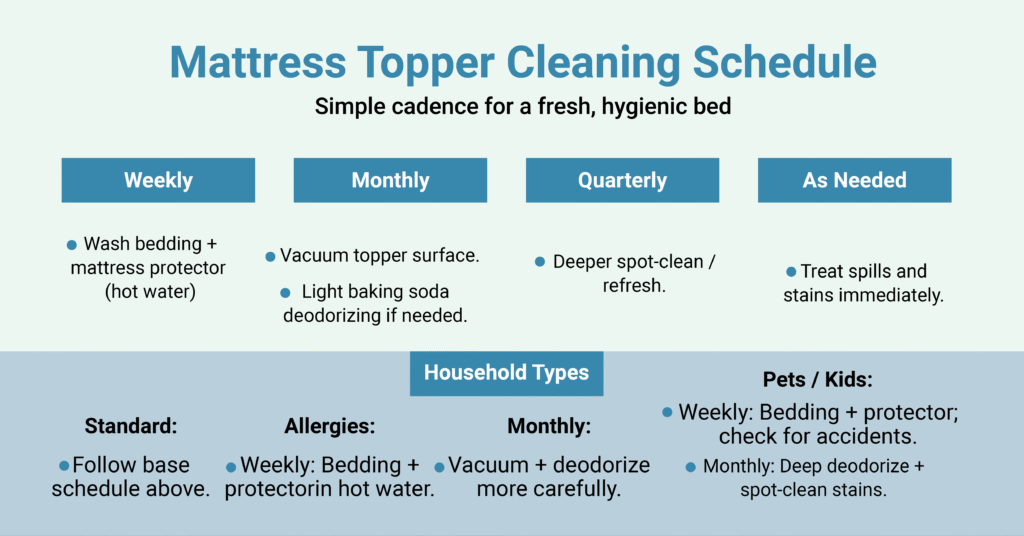
To understand how often you should clean a mattress topper, follow this timeline:
- Weekly: Wash all bedding, including your mattress protector waterproof, in hot water.
- Monthly: Vacuum the topper’s surface and deodorize with baking soda.
- Quarterly: Perform a deeper spot-clean or refresh as needed.
- As-Needed: Spot clean stains immediately.
Maintenance Cadence by Household Type
| Household Type | Weekly Cadence | Monthly Cadence |
| Standard | Wash bedding. | Vacuum and deodorize the topper. |
| Allergies | Wash bedding and protector in hot water. | Vacuum and deodorize the topper. |
| Pets/Kids | Wash bedding and protector; check for spots. | Deep deodorize and spot-clean stains. |
Covers and Encasements
A waterproof or hypoallergenic mattress protector works as the defensive surface against visible debris and dander. You can use a mattress encasement with zips to protect the topper from bed bugs and mold. Further, use a washable protector to shield the topper from spills, sweat, and allergens. Follow the care label instructions for laundering your cover.
When to Replace Your Topper
While following a regular care schedule makes your topper durable, you must understand that it needs to be replaced after years of use. Look for these signs:
- Sagging or Indentations: The topper no longer provides even support.
- Lingering Odors: A persistent smell that doesn’t go away after cleaning.
- Recurring Mold: Any signs of mold that return after cleaning indicate a deeper issue.
- Lost Loft: A down or fiberfill topper that has become flat and lumpy.

Frequently Asked Questions
Can you machine wash a mattress topper, or only certain types?
Most of the mattress toppers come with a care label to give users instructions for cleaning them. The machine washable materials often include cotton, polyester, and a few down or feather toppers. However, before washing them, follow all the safety recommendations. Many latex and memory foam topper care labels advise washing them via spot cleaning.
How do I get the urine smell out of a memory foam topper without ruining it?
To remove urine from a mattress topper, start by blotting the area. Then, use an enzyme cleaner to break down the odor-causing proteins. Afterwards, sprinkle a generous amount of baking soda over the spot, let it sit for several hours to absorb any lingering smell, and then vacuum it up thoroughly.
Is steam cleaning safe for mattress toppers made of latex or memory foam?
No, steam cleaning is not safe for mattress toppers made of memory foam or latex. The high heat and moisture can cause irreversible damage to the foam’s structure. It may also create an environment for mold and mildew to grow in the core if the topper, making it unsafe for sleep.
How long does a topper take to dry, and how do I speed it up?
The best way to dry a mattress topper quickly is to make sure the room has good airflow with fans and a dehumidifier. Avoid direct heat, and be cautious with sunlight, as it can damage latex. A topper is dry when it feels light and has no damp spots.
What’s the safest way to remove sweat/yellow stains?
For most toppers, you can safely treat yellow stains with a solution of white vinegar or a diluted detergent. For tougher stains on non-latex materials, a solution of hydrogen peroxide 3 percent and water can be effective. However, always test it first on an inconspicuous area so that it doesn’t cause discoloration.
How often should I clean or deodorize a mattress topper?
For optimal hygiene, you should vacuum your topper every week when you change your sheets. Additionally, try to deodorize the topper with the help of the baking soda method quarterly. In case of accidents and spills, spot-clean them immediately to avoid permanent stains.
Do I need a mattress protector if I have a topper?
Yes, using a waterproof or organic mattress protector over your topper is highly recommended. It acts as a barrier against spills, sweat, and allergens, protecting both your topper and your mattress. A protector is easier to remove and launder than the topper itself, easing your cleaning routine.
Get Long-Lasting Freshness and Comfort!
When learning how to clean a mattress topper, the first step should be understanding the material of your mattress topper. After that, determine the cleaning method that suits your topper and fulfils the requirements of its care label. You must start by lifting the stain by spot-cleaning the affected area in foam toppers and blotting as per the manufacturer’s instructions. Once it is clean and washed thoroughly, place the topper in a well-ventilated room to dry it out completely.
By following these easy steps and using a mattress encasement, you make sure your sleep sanctuary remains fresh and clean for restorative rest. So, grab your cleaning supplies and follow this guide to set a maintenance cadence for the best comfort.