




When you purchase through our links, we may earn a commission at no extra cost to you. As an Amazon Associate, DreamSlumber earns from qualifying purchases. Learn more.
To boost REM sleep naturally, start by keeping a consistent time to wake up and getting morning sunlight for your circadian rhythm. Further, limit the consumption of alcohol and caffeine before bed to keep your cycle from being disrupted. Support these habits with a calming wind-down routine to manage stress and keep your bedroom cool and dark. While these adjustments may take days or weeks to take effect, the result is better memory consolidation, mood stability, and mental clarity.
Despite sleeping for a full eight hours, you may still wake up feeling mentally foggy and emotionally frayed. This lingering exhaustion shows that while your body rested, your mind did not get the restoration it needed. The missing piece is REM (Rapid Eye Movement) sleep, which is responsible for cognitive repair. That is why you must understand how to boost REM sleep to help your body achieve the goal of recovery.
For your brain’s nightly therapy, REM sleep handles memory consolidation and emotional processing. However, this stage is weak and can get interrupted if your circadian rhythm shifts, cortisol spikes, or low production of melatonin. This further reduces the quality of your sleep in this stage, negatively impacting your mood and focus. The good news is that you can optimize your sleep stages by adopting sleep-friendly habits and adjusting your routine. So, scroll down to understand these small lifestyle changes with a step-by-step guide to improve your REM cycles naturally.
Step 1: Understand What REM Sleep is and Why it Matters
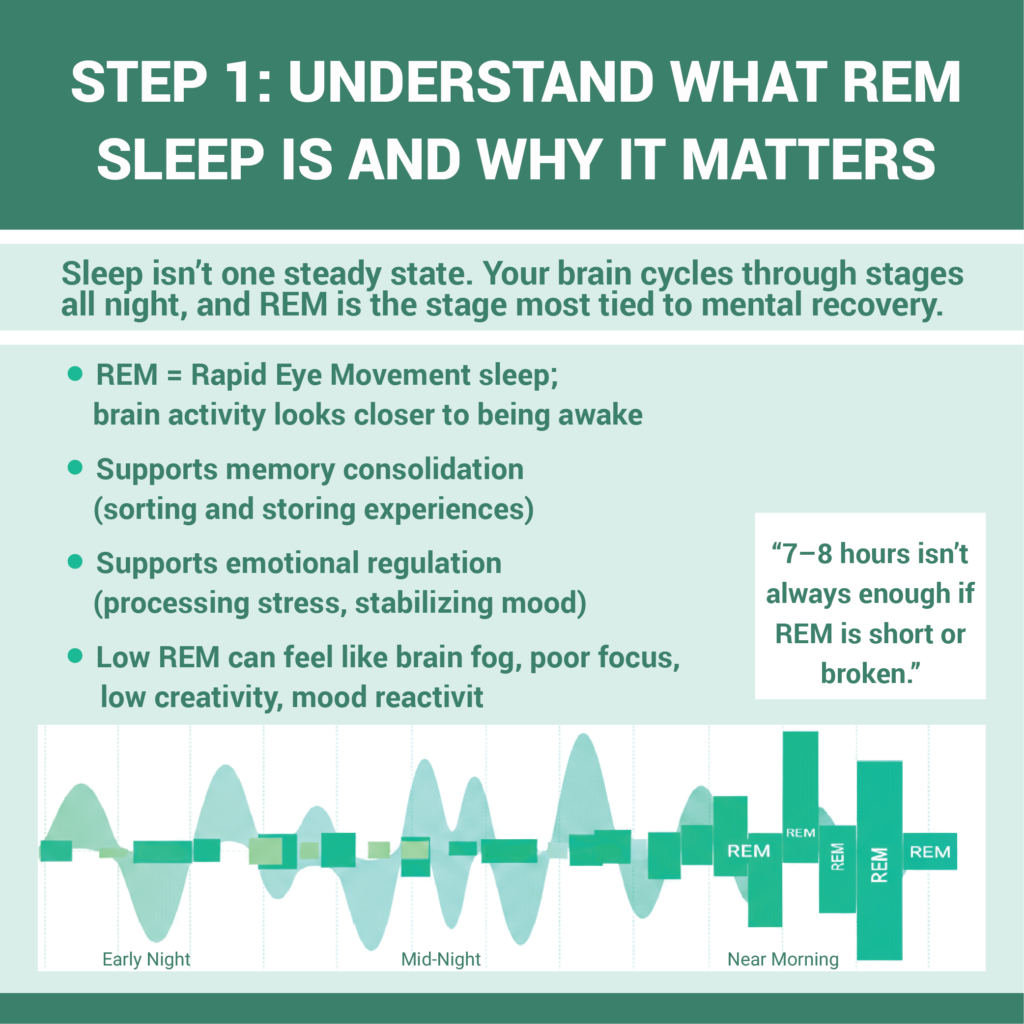
We have a common misconception that the sleep stage remains consistent throughout the sleeping period at night. This is not how it works. Our brain moves through various sleep stages that help our body get complete rest. One of these stages is rapid eye movement sleep. This is the phase where the most important mental processing happens. While other stages focus on physically repairing your body, REM sleep cycles are dedicated to “rebooting” your mind. Here are further details about REM sleep:
- During the REM stage, your brain becomes more active, and its activity becomes similar to when you are awake.
- This high-energy state of the brain is important for memory consolidation, during which it organizes your experiences and stores them as long-term memories.
- REM sleep also plays a major role in emotional regulation, which helps you process stress and maintain a stable mood throughout the day. These memory consolidation, sleep, and emotional regulation sleep stages also keep your brain healthy.
If you are searching for “why is my REM sleep so low,” chances are you are already suffering from some of the consequences.
Poor REM sleep often manifests as daytime mental fatigue, which makes it difficult to focus or stay creative. Without enough of this stage, you may experience sleep deprivation. This leaves you feeling emotionally reactive or “foggy,” even if you slept for seven or eight hours.
Step 2: Lock in a Consistent Sleep and Wake Schedule
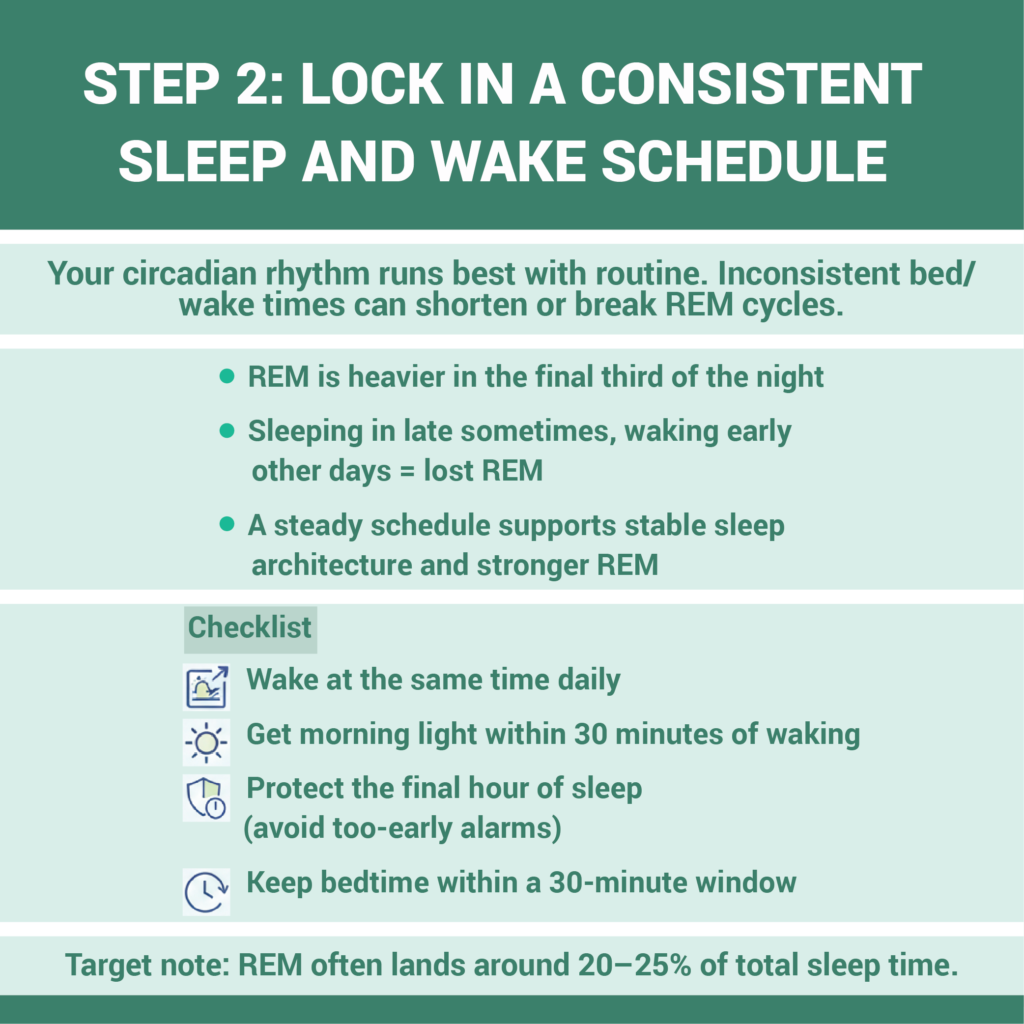
Your body has an internal 24-hour clock known as the circadian rhythm. This rhythm helps the body know when it is time to cycle through different sleep stages. When you wake up and go to bed at different times, you confuse this internal clock. This results in fragmented or shorter REM cycles.
- Most people think that the REM stage is distributed uniformly throughout the night. Instead, it is concentrated in the final third of your sleep period. This means that if you cut your sleep short by waking up early or keeping an irregular schedule, you are disproportionately losing out on your most restorative REM time.
- By sticking to a strict sleeping schedule, you stabilize your sleep architecture and allow your brain to maximize its time in this important phase.
To enhance your sleep efficiency, make it a daily habit to wake up at the same time every single day. This small lifestyle change helps you improve your circadian rhythm. This further keeps your body in a healthy state for better melatonin production in the evening.
If you are wondering how much REM sleep do you need, keep a steady routine to hit that target of 20-25% of your total sleep time.
Consistent Sleep Schedule Checklist
To maintain a routine, create a plan, and follow these best habits for REM sleep:
- Fixed Waking Up Time: To improve your biological internal clock, set your alarm to wake up at the same time every morning.
- Sunlight Exposure: Within just 30 minutes of waking up, sit near a window or step outside to get sun exposure.
- The “Final Hour”: Avoid alarms that are too early to keep your brain from getting startled during the last hour of your sleep. This is when your longest REM cycles occur.
- Fixed Bedtime: Try to get into bed within the same 30-minute window each night.
Step 3: Optimize Light Exposure to Support Circadian Rhythm
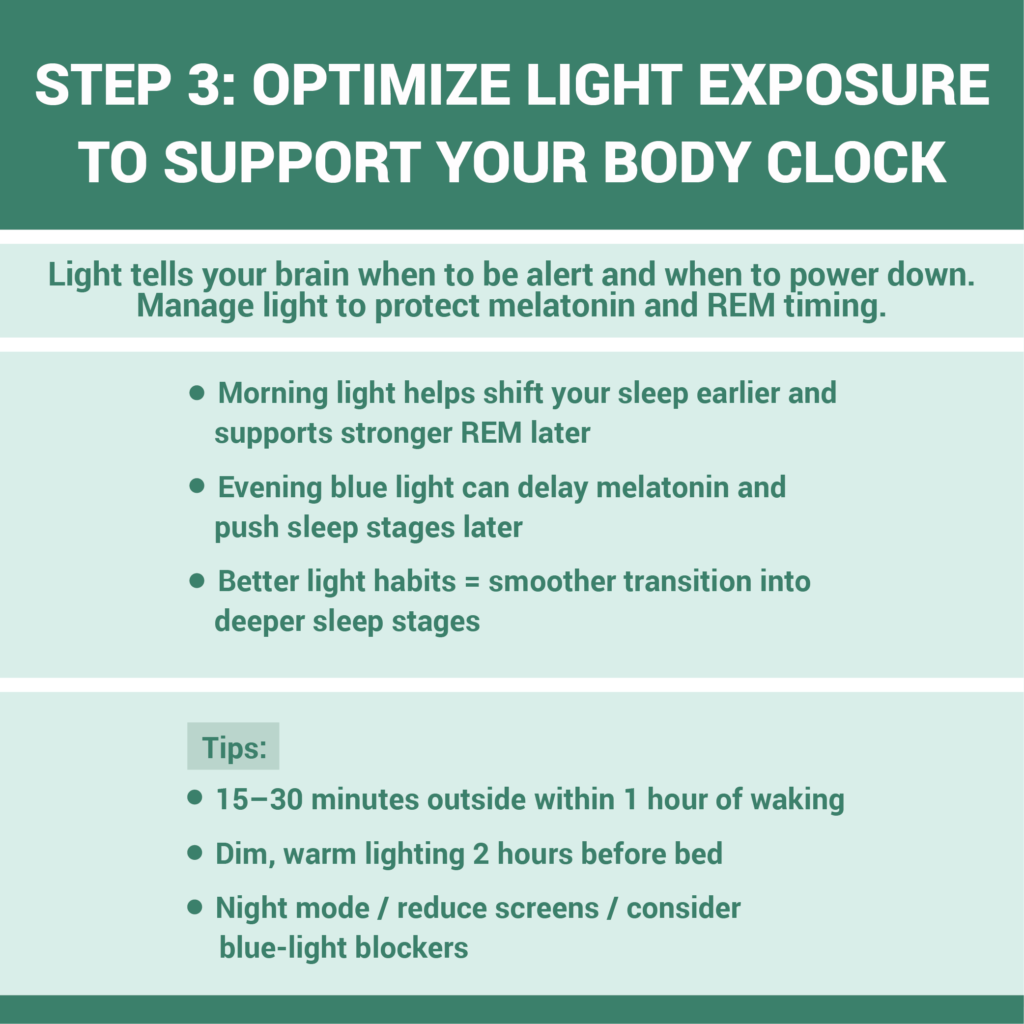
Light is the most powerful environmental cue that helps your circadian rhythm understand that it is time to rest. When light hits your retinas in the morning, it tells your brain to stop the production of melatonin and start increasing cortisol. This entire process helps you feel alert.
- Research shows that every 30-minute exposure to morning sunlight (before 10 a.m.) can enhance your sleep timing. This helps you fall asleep earlier and secure more REM sleep later in the night.
- In contrast, if you have a habit of overusing a smartphone or an LED screen, the blue light exposure disrupts your sleep. It does so by tricking your brain in the evening into thinking it is still daytime. This suppresses melatonin and delays your “biological night,” pushing your sleep stages later.
By managing your light exposure, you practice good hygiene and prepare your brain for deep sleep.
Tips for Biological Light Management:
- Seek Sun Exposure: Spend at least 15-30 minutes outside within an hour of waking.
- Dim the Lights: Use warm and dim lights at least two hours before bed to improve the rise in melatonin.
- Optimize Your Screens: Put your phone on night mode, or you can use blue-light blocking glasses if you have to use your devices in the evening.
Step 4: Adjust Diet, Caffeine, and Alcohol to Protect REM Sleep
You should watch your diet and maintain healthy eating habits to nourish your body and keep a stable sleeping schedule. Here are a few key considerations:
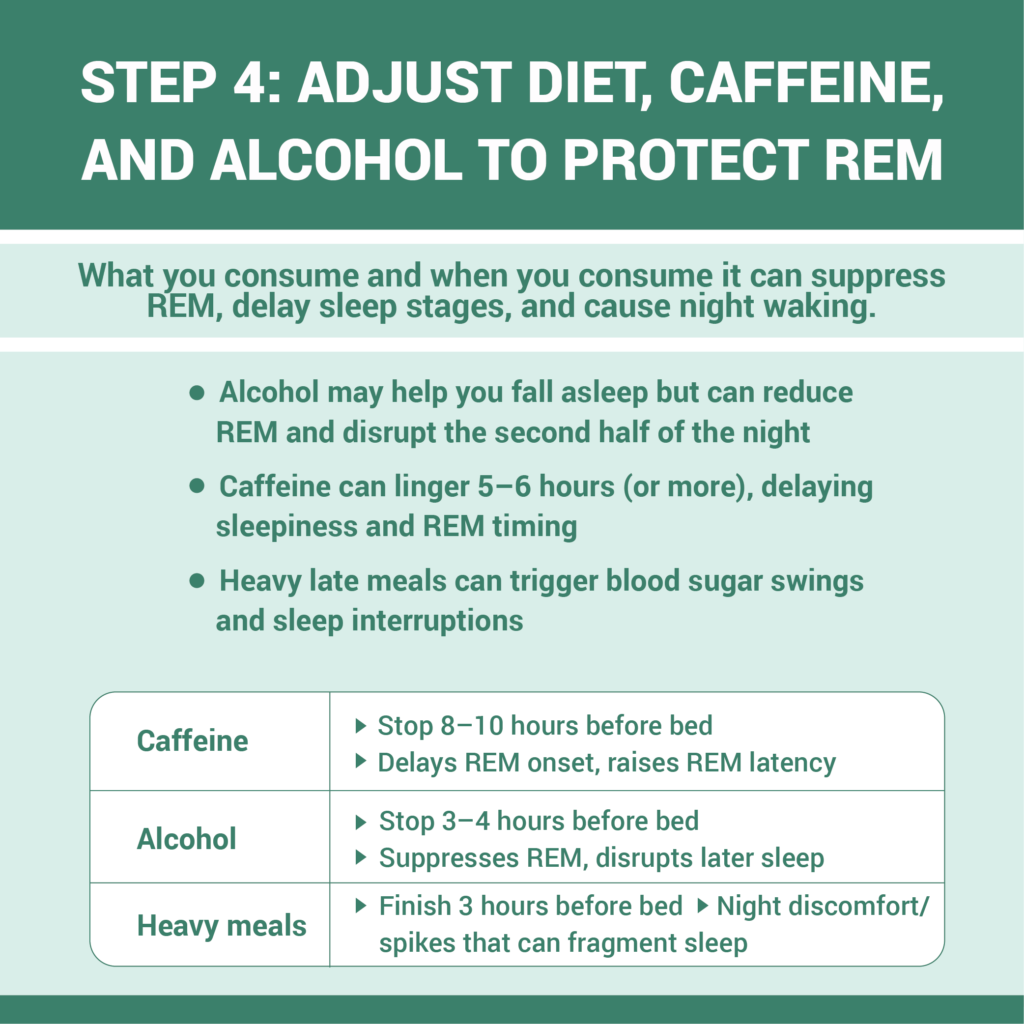
- Try to avoid having alcohol at night as an aid for falling asleep. This has a negative impact on your sleep cycle as alcohol acts as a powerful REM suppressant. Consumption in even moderate doses can delay the first REM period by over 18 minutes. It can also reduce total REM duration by as much as 40 minutes.
- Similarly, caffeine’s impact on REM sleep is also negative. Caffeine has a long half-life (5-6 hours), meaning that an afternoon cup of coffee is still blocking sleep-promoting receptors in your brain at bedtime. Studies show that regular caffeine sleep stage affect the REM cycle by delaying the production of melatonin. This makes it harder for your brain to enter the restorative phases of rest.
- Indulging in heavy meals late at night can lead to blood sugar spikes and overnight glucose intolerance. This may lead to sleep interruptions, and this fragmented sleep can reduce your overall sleep efficiency. It may also impact your average time to fall asleep at night.
The table below summarises the substance impact on sleep:
| Substance | Ideal Timing | Impact on REM Sleep |
| Caffeine | Stop 8-10 hours before bed | Delays REM onset and increases REM sleep latency. |
| Alcohol | Stop 3-4 hours before bed | Suppresses REM and causes second-half sleep disruption. |
| Heavy Meals | Finish 3 hours before bed | Triggers blood sugar spikes that lead to poor REM. |
Step 5: Reduce Stress and Pre-Bed Mental Arousal
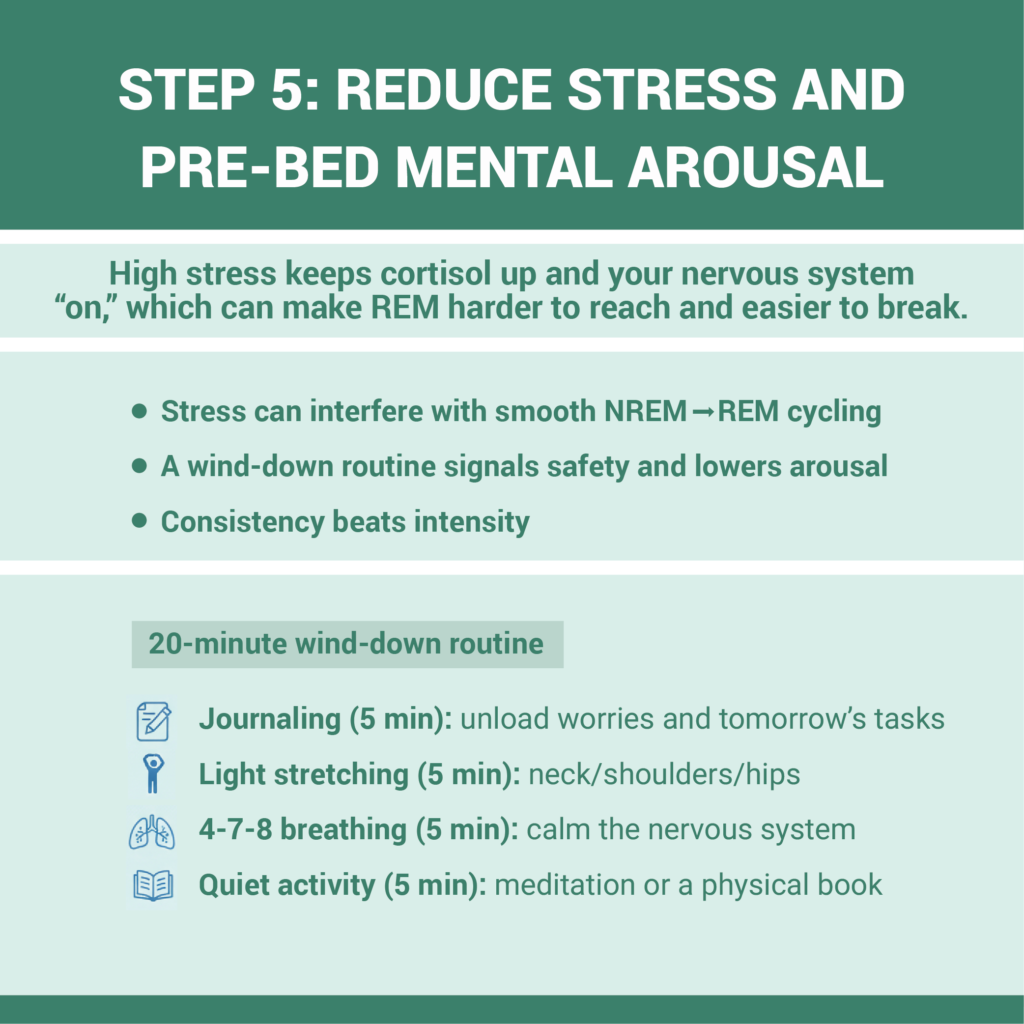
Another important factor is your stress levels, which directly impact your sleep quality. This is because mental or physical stress leads to excessive production of cortisol, or the stress hormone. Here’s how it occurs:
- When cortisol is present in high levels, it interferes with your sleep architecture of NREM and REM cycles. It keeps the sympathetic nervous system at high alert, not letting your brain relax at night.
- Clinical research shows that the infusion of cortisol in the nervous system of the body decreases the REM sleep signals your brain receives. This makes it difficult for the brain to prepare for this deep sleep stage.
To reach the stage of REM sleep, your body must switch from an active state to a relaxing state before bed.
- For this, you need a regular wind-down routine that lowers your cortisol. This will tell your brain that it is safe to let go of control and enter the stage of sleep.
- Focus on maintaining consistency instead of engaging in high-intensity exercises. You can do a 15-minute routine daily to lower your heart rate and prepare yourself for a restful night.
A 20-Minute Routine:
- Journaling (5 mins): Before bed, write down your to-do items or any thoughts that are worrying you. This will minimize the overall mental loop that may cause stress.
- Light Stretching (5 mins): Gently move your neck, shoulders, and hips to release physical tension.
- Breathing Exercises (5 mins): Try the 4-7-8 technique by inhaling for 4 counts, holding for 7, exhaling for 8 to activate your parasympathetic nervous system.
- Meditation or Reading (5 mins): Try any low-stimulation activity like meditation or reading a physical book.
Step 6: Create a REM-friendly Sleep Environment
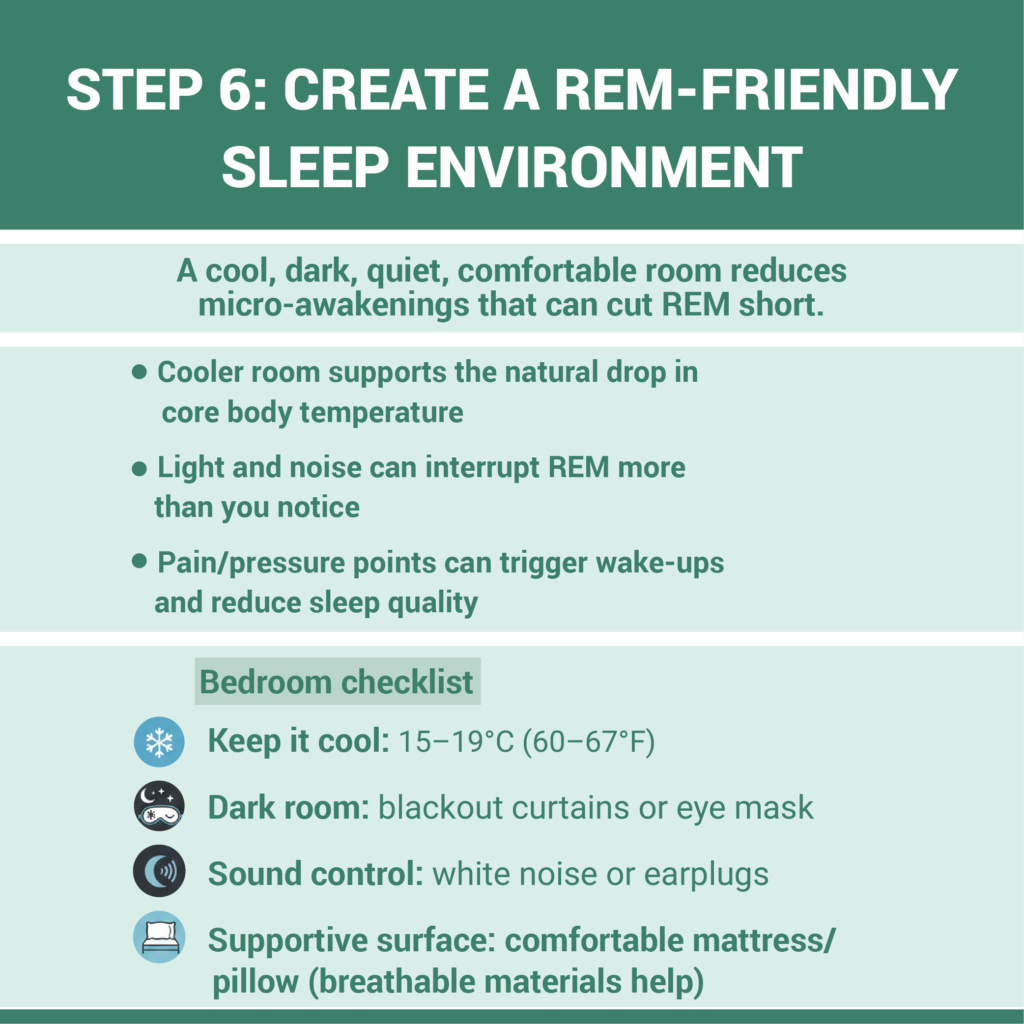
For better REM cycles, create a stress-free sleep sanctuary that supports your body and relieves your pressure points. If you have an unsupportive bedroom, you may face sleep interruptions at night due to overheating or slight pain in the body.
- For temperature regulation, make sure your core body temperature is low to get into the sleep state. Try to sleep in a cool room with a temperature between 60-67°F (15-19°C) to avoid any night sweats. Use a cooling mattress and bedding that is breathable to sleep cooler.
- For physical comfort, discard your unsupportive mattress or pillow that may be causing pressure or pain in your shoulder, neck, or hip. You can also use a supportive mattress topper to enhance your already existing mattress.
- Additionally, if you suffer from any health conditions or specific joint pain due to arthritis, buy a specialized mattress to boost your REM sleep.
REM-Supportive Bedroom Checklist:
- Keep it Cool: On your thermostat, set the temperature to 18°C (around 65°F) to keep the core temperature of the body cool.
- Maintain Dark Bedroom: Prevent any light exposure by using blackout curtains or an eye mask.
- Control Sound: You can use a white noise machine to fizzle out environmental sounds from outside.
- Supportive Surface: Invest in a medium-firm memory foam mattress with breathable construction to enhance the quality of your REM sleep.
Step 7: Exercise and Daytime Habits that Increase REM Sleep
Most of the clinicians advise including physical activity in the daily routine to improve the quality of sleep. This is one of the most effective ways to improve REM sleep. Here’s what you should do:
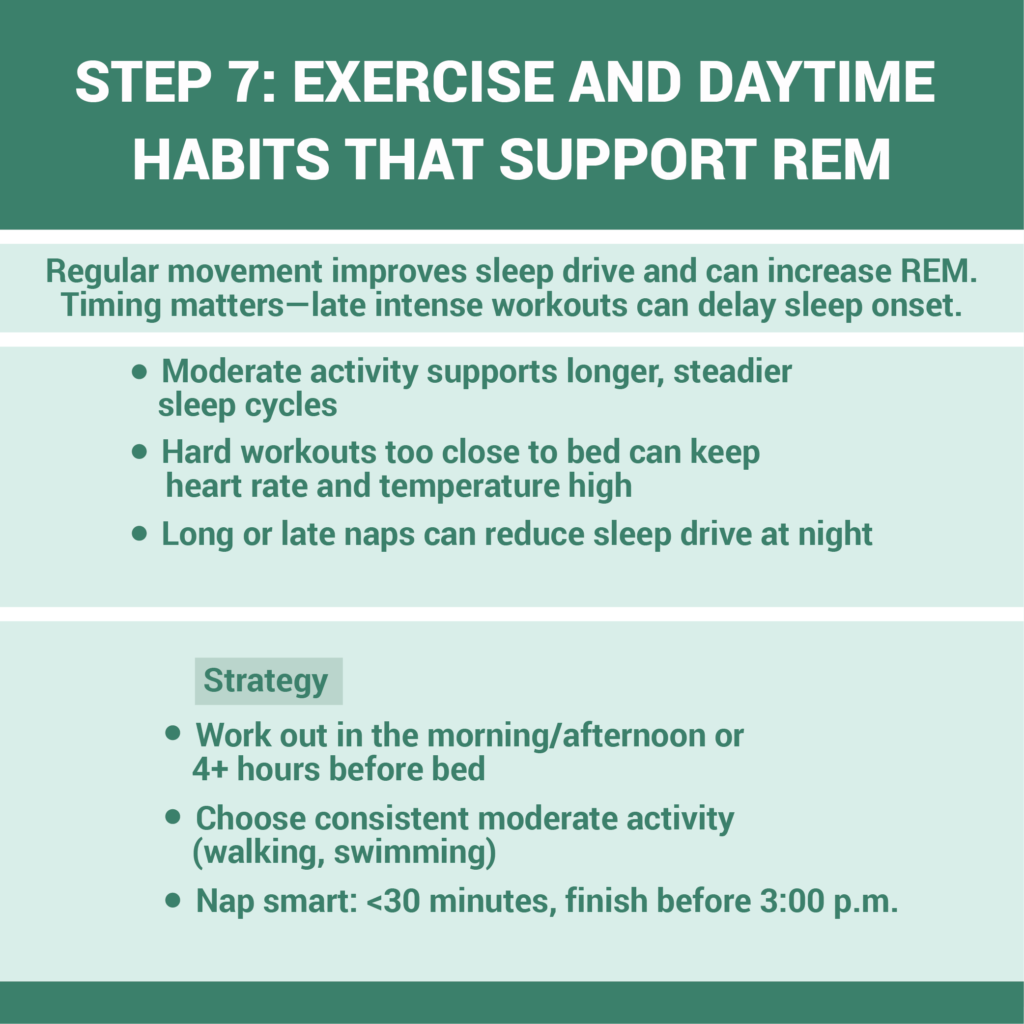
- Engage in moderate-intensity physical activities to increase the total duration of REM cycles. This is because exercise increases your overall drive to sleep or the biological need for rest. Furthermore, it helps your body get through all sleep stages during the night.
- While physical activity is important, make sure you do it at the right time. If you do strenuous cardiovascular exercise too close to bed, it may result in poor REM sleep. This is due to the high heart rate and body temperature post-intense workouts, which may take hours to get back to baseline. This physiological arousal can impact the production of melatonin and delay the onset of your first REM cycle.
- If you want to take naps during the day, opt for 20-minute short naps to refresh your mind. Try not to sleep for over 90 minutes or too late in the afternoon. This may reduce the REM pressure and your sleep drive, making it difficult to fall asleep at night.
Exercise and Sleep Strategy:
- Morning or Afternoon Workouts: Maintain a regular schedule to exercise daily in the morning or at least 4 hours before bedtime.
- Maintain Consistency: Engage in mild exercise like walking or swimming every day instead of high-intensity sessions.
- Short Naps: Try to keep afternoon naps under 30 minutes and finish before 3:00 p.m.
Step 8: Track REM Sleep Realistically and Know When to Seek Help
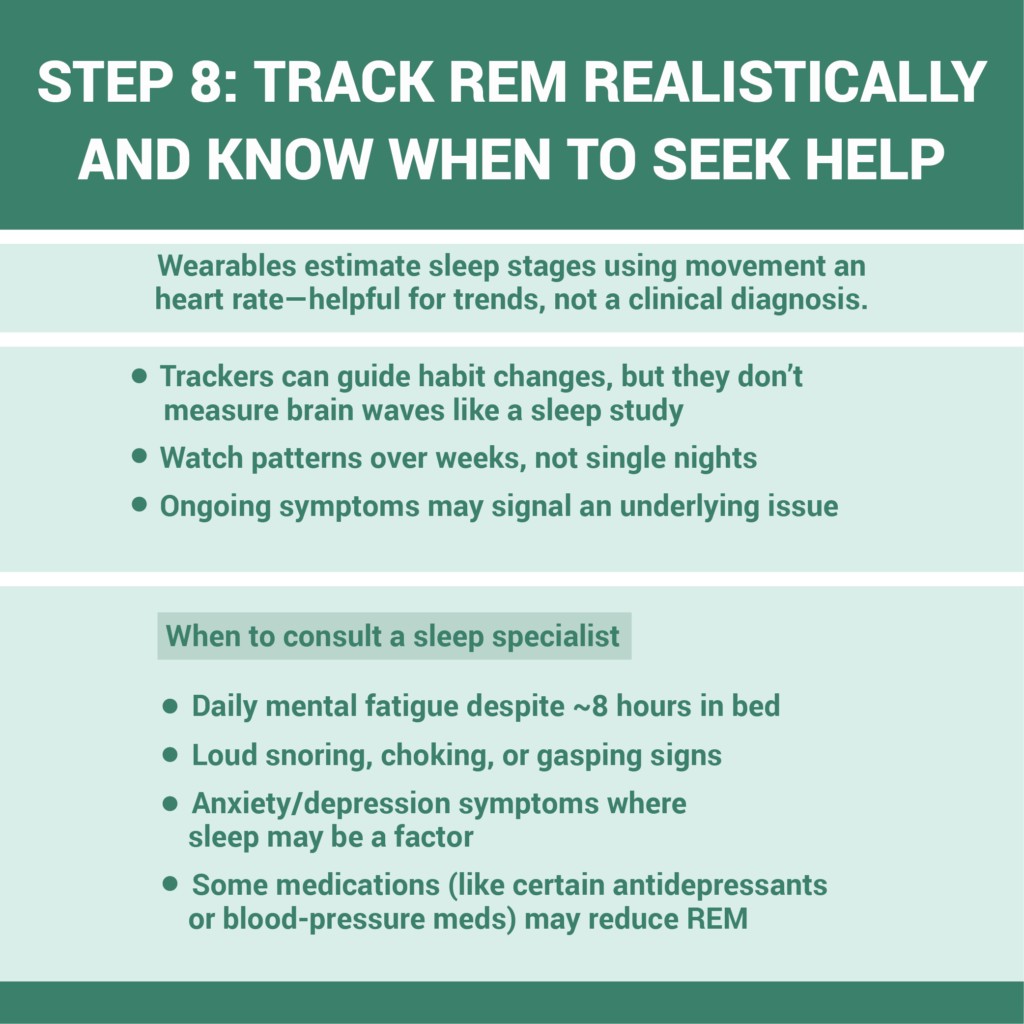
For a consistent and healthy sleep routine, you can use a sleep tracker REM feature in your preferred wearable, like a smartwatch. This will help you monitor and evaluate the sleep habits that are working or not working for you. However, keep in mind that these trackers have limitations. They use heart rate and movement to calculate the trend in sleep stages. This is not as effective as direct brain-wave monitoring used in a clinical polysomnography. Therefore, you must not depend completely on your tracker’s data trends. Instead, use it as a guide and not like a medical record.
If you regularly notice the signs of REM sleep deprivation despite following all the REM sleep optimization tips, it is best to consult a professional. You may be suffering from chronic issues like sleep apnea or deep-seated insomnia. These conditions require a professional sleep study by a sleep specialist to diagnose the root cause.
When to Consult a Sleep Specialist:
- You feel mental fatigue sleep symptoms every day, despite spending 8 hours in bed.
- If you see signs of sleep apnea, such as loud snoring or gasping.
- Signs of depression or anxiety may be due to poor sleep, and you will need a professional to determine if sleep is a contributing factor.
- Antidepressants and blood pressure medications can also suppress rapid eye movement sleep.

Frequently Asked Questions
How much REM sleep do adults need each night?
For healthy adults, it is recommended that they get about 20% to 25% of their total time asleep for the REM stage. For a standard 8-hour rest, this means you should spend about 90 to 120 minutes in this stage. This makes sure your body gets enough sleep for memory consolidation and emotional processing.
Why do I get very little REM sleep according to my tracker?
A sleep tracker is an effective device to help you monitor your sleep trends. However, its estimate is based on your movement and heart rate at night. It is different from the brain-wave activity measured in a clinical polysomnography. Additionally, your REM may be low due to high cortisol and sleep disruption. Another reason may be the alcohol effect on REM sleep, which impacts these cycles.
Does alcohol permanently reduce REM sleep?
No, alcohol does not cause permanent damage. However, it is one of the most common causes of poor REM sleep on the nights it is consumed. You may experience a REM rebound the following night as your body tries to recover. The best way to ensure consistent REM sleep cycles is to limit alcohol consumption several hours before bed.
Can supplements like melatonin increase REM sleep?
Yes, it may help improve REM sleep. Melatonin production tells your body that it is time to rest, but supplements do not directly enhance the intensity of REM. Instead, melatonin helps stabilize your circadian rhythm. It allows you to fall asleep more reliably and provides your brain with a better window to complete all its sleep stages.
Does waking up early reduce REM sleep the most?
Yes, the REM stage is more intense at the last hour of the morning. It becomes more frequent and longer in the final third of the night. That is why early alarms may cut off your most restorative cycles. If you are trying to figure out how to get more REM sleep at night, avoid an early morning alarm that may interrupt your deep sleep window and build a supportive bedroom setup.
How long does it take to improve REM sleep naturally?
You may see a slight increase in sleep efficiency within just a few days of maintaining your sleep-wake cycle. However, it takes two to four weeks of consistent best habits for REM sleep. These can include reducing morning light exposure and regular exercise to see a shift in your sleep quality.
When should low REM sleep be medically evaluated?
Low REM sleep should be medically evaluated if it continues for weeks despite following good sleep habits. If you still feel unrefreshed or mentally exhausted during the day, you should see a sleep specialist. Moreover, notice if you have loud snoring, gasping or choking during sleep, episodes of acting out dreams, or anxiety or depression. These can be conditions that disrupt REM sleep and require professional assessment.
Conclusion
If you want to learn how to boost REM sleep, first align your daily habits with the biological rhythms that impact your sleep cycles. Keep it simple by waking up and sleeping at the same time daily to maintain your circadian rhythm. Next, keep your morning routine mindful to protect the final third of the night, where REM sleep is concentrated. Avoid the overconsumption of alcohol and limit caffeine intake to help your body get into deep sleep stages.
In addition to making these lifestyle changes, boost your melatonin production by exposing yourself to sunlight in the morning. Relax your mind by creating a wind-down routine to reduce further cortisol levels that cause stress. Finally, create a supportive bedroom setup and keep it dark and cool to minimize any interruptions. Track your sleep daily, and if improvements plateau despite daily efforts, consult a professional. Commit to a gentle 14-day “consistency reset”. Notice how your REM sleep, circadian rhythm balance, and overall sleep quality respond. Small, steady steps today can make a real difference tomorrow.