When you purchase through our links, we may earn a commission at no extra cost to you. As an Amazon Associate, DreamSlumber earns from qualifying purchases. Learn more.
To deep clean your mattress, start by using a vacuum cleaner to remove surface debris and spot-clean stains with a mild detergent or enzyme cleaner. Further, deodorize the mattress by using baking soda, which absorbs the moisture. You can also air it out to make sure it is completely dry and clean. Use a mattress protector to prevent future stains and buildup of allergens.
An average American spends about 11 hours per day sleeping or sitting on their bed. This means that stains and odours are inevitable. These can be from a spilt cup of coffee, an accident from a pet, or the buildup of sweat and body oils. The big question is, do you know how to clean a mattress without causing damage or spending a fortune? Before you consider throwing out a good bed, know that you have options.
Here, we will discuss how to tackle tough stains and persistent odors, all while protecting your warranty and your wallet. In this guide, you will discover five DIY methods under $50 for deep cleaning and restoring your mattress.
If your mattress is over eight years old and shows dips or damage that cleaning cannot fix, it might be best to replace it. For this, you can explore our top picks for the best memory foam mattresses. Otherwise, grab your cleaning supplies and let’s get that mattress looking and feeling its best.
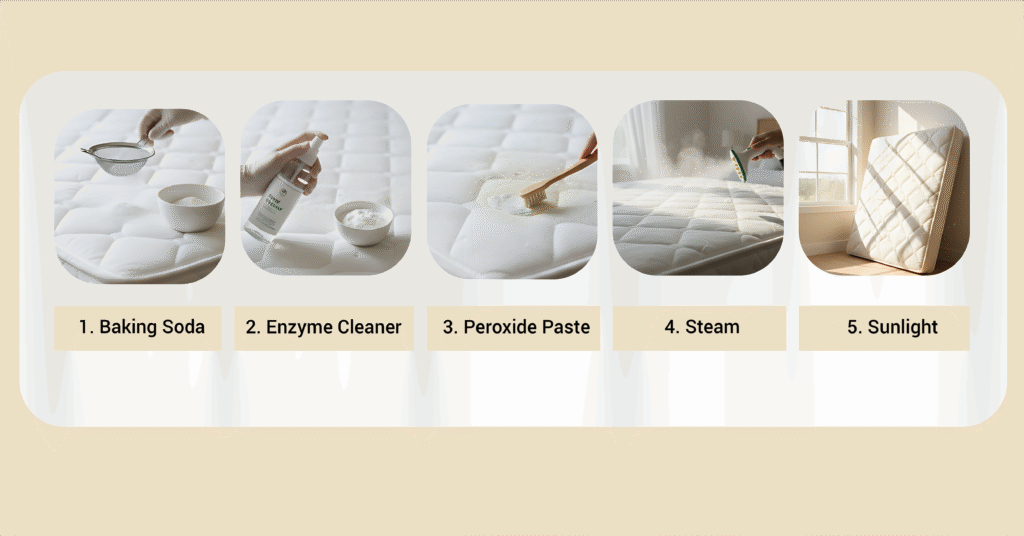
How to Clean a Mattress: Five Proven Methods
One must strive for long-term sleep hygiene by regularly cleaning their mattresses. This protects your health from allergens and bacteria, and also enhances the longevity of the mattress. Let us discuss 5 proven methods to clean your mattress using affordable ingredients with natural cleaning solutions:
1. Baking Soda Deodorizer (Universal and Low-Risk)
The baking soda mattress cleaning method works as an easy and safe way to get rid of bed odor and dust mites. It is used for general household cleaning, which works on nearly every type of mattress. Here is the step-by-step process on how to clean a mattress with baking soda and vinegar:
- Step 1: Strip all bedding and launder it on the hottest setting that the fabric can handle safely.
- Step 2: Vacuum the surface of the mattress using an upholstery tool. Pay close attention to seams and tufts where dust and allergens collect.
- Step 3: Using a sifter, sprinkle a light and even separate layer of baking soda over the entire mattress. For a calming scent, mix a few drops of lavender essential oil into the baking soda before applying. However, avoid letting the oil touch the mattress’s density foam directly.
- Step 4: Let the baking soda sit for at least 4 hours, though leaving it for up to 8 hours gives the best results.
- Step 5: Vacuum the mattress again to remove all the baking soda completely.
Best For: General odors from sweat, smoke, or mustiness.
Note: This method is harmless on most mattress materials and can be repeated monthly as part of your mattress care guide.
2. Enzyme Cleaner for Organic Stains (Urine, Sweat, Vomit, Food)
When accidents like urine or vomit happen, an enzyme cleaner for mattress stains is the best solution. These cleaners use enzymes to break down the proteins in organic stains. This removes the stain completely instead of just masking it. The complete process on how to clean vomit from mattress quickly is as follows:
- Step 1: If the stain is fresh, blot away as much moisture as possible lightly with a clean cloth. Do not rub, as this can push the stain deeper into the mattress fibers.
- Step 2: To clean urine from bed or other spills, spray the enzyme cleaner onto a cloth and dab the stained area. Avoid oversaturating the mattress if you have memory foam.
- Step 3: Let the cleaner sit for 10-15 minutes, or as directed on the product label.
- Step 4: Blot the area with a clean and dry cloth to absorb the moisture.
- Step 5: Speed up the drying process by pointing a fan at the wet spot and opening nearby windows.
Best For: Accidents from pets or kids, sweat stains on mattress, and food spills.
Note: Always test the cleaner on a small area first. Avoid soaking the mattress as it can damage the foam and lead to the growth of mold.
3. Oxi/Peroxide Paste for Blood & Yellowing (Spot-Treat Only)
You can follow our DIY mattress stain remover for yellow stains and tackle dried blood spots. You must note that this method uses potent ingredients and must only be used for spot treatment. The steps on how to remove yellow stains from mattress are:
- Step 1: Take a small bowl. Mix a thin paste using 1 tablespoon of 3% hydrogen peroxide, 1 teaspoon of mild dish soap, and 1 tablespoon of baking soda.
- Step 2: Dab the paste onto the stain with a cotton swab. Avoid rubbing, which can spread the stain.
- Step 3: After letting it sit for a few minutes, wipe the area with a slightly damp cloth.
- Step 4: Blot the spot with a dry towel until the moisture has evaporated.
Best for: Dried blood, old sweat stains, and other tough protein stains.
Note: Hydrogen peroxide can lighten or discolor fabric, so always perform a patch test on an inconspicuous area. Use this method sparingly on memory foam mattresses.
4. Steam (If Manufacturer Allows)
If you are looking for how to clean a mattress without vacuum, a garment or upholstery steamer can help. The high temperature kills surface bacteria and dust mites effectively. However, before steam cleaning, always check your mattress warranty. Many manufacturers advise against steaming, especially for materials like memory foam or latex, as heat can damage their structure. If it’s allowed, follow these steps:
- Step 1: Hold the steam cleaner about 6-8 inches away from the surface.
- Step 2: Use short and quick passes across the entire mattress. Make sure the fabric is not too wet.
- Step 3: Use a fan or dehumidifier to dry a wet mattress immediately after steaming.
Best For: Surface-level sanitation and a light refresh.
Note: Never use a steamer unless your mattress manufacturer’s care instructions explicitly allow it. This is because excess moisture can lead to mold and mildew.
5. Sun and Air Out (Natural Refresh)
In your quest to find how to disinfect a mattress naturally, fresh air and sunlight are the answers you are looking for. The sun’s UV rays are a natural disinfectant that can help kill bacteria and remove odor from mattress fabrics naturally. The process includes:
- Step 1: On a dry, sunny day, place your mattress near an open window or on a balcony to let in sunlight and airflow.
- Step 2: To alleviate odour, air the mattress out and use natural materials like the baking soda method by deodorizing the mattress before airing it out.
Best For: Controlling moisture and eliminating musty odors.
Note: While beneficial, avoid leaving a memory foam mattress in harsh, direct sunlight for extended periods, as intense UV exposure can degrade the foam over time.
Add-Ons for a Deeper Cleaning:
Here are a few extra mattress cleaning hacks to keep your bed in top-notch condition.
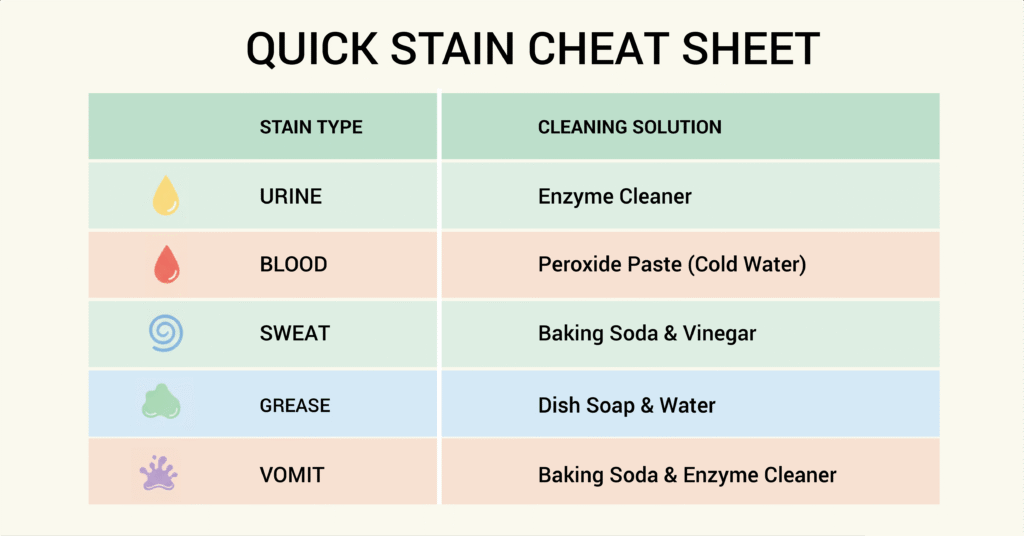
Quick Stain Cheat Sheet
The table below compares cleaning solutions for different types of stains to help you find quick and ready-to-apply solutions:
| Stain Type | Recommended Cleaning Solution | Pro Tip |
| Urine | Enzyme cleaner | Blot immediately, then use a fan to dry the area completely after cleaning |
| Blood | Cold water + Oxi/Peroxide Paste | Always use cold water, as hot water can set the stain permanently |
| Sweat/Yellowing | Oxi/Peroxide Paste (use sparingly) | Test on a hidden spot first, as peroxide can lighten fabrics |
| Grease/Makeup | Mild dish soap solution | Dab with a cloth dampened with soapy water, then rinse with a clean and damp cloth |
| Vomit | Enzyme cleaner + Baking soda | Scrape off solids first, then use an enzyme cleaner and follow with baking soda to deodorize |
Disinfecting Safely
You don’t need harsh chemicals to make a disinfect mattress spray. Use a light mist of 70% isopropyl alcohol solution on a cloth and dab gently onto the surface. This can kill germs without soaking the mattress. Another option is a 50/50 solution of white vinegar and water in a spray bottle.
Drying Fast
Keep your mattress dry to prevent the growth of mold. After any spot cleaning, point a box fan directly at the damp area. You can further open windows to increase airflow, or run a dehumidifier in the room. Don’t make the bed until the mattress is completely dry to the touch.
Allergy/Dust Mites
Follow these tips on how to get rid of bed odor and dust mites:
- Wash all bedding weekly in hot water.
- Use a high-quality and zippered mattress protector to create a barrier against dust mites, spills, and allergens.
- Vacuum mattress surfaces monthly to remove their food source (dead skin cells), which helps keep their population down.
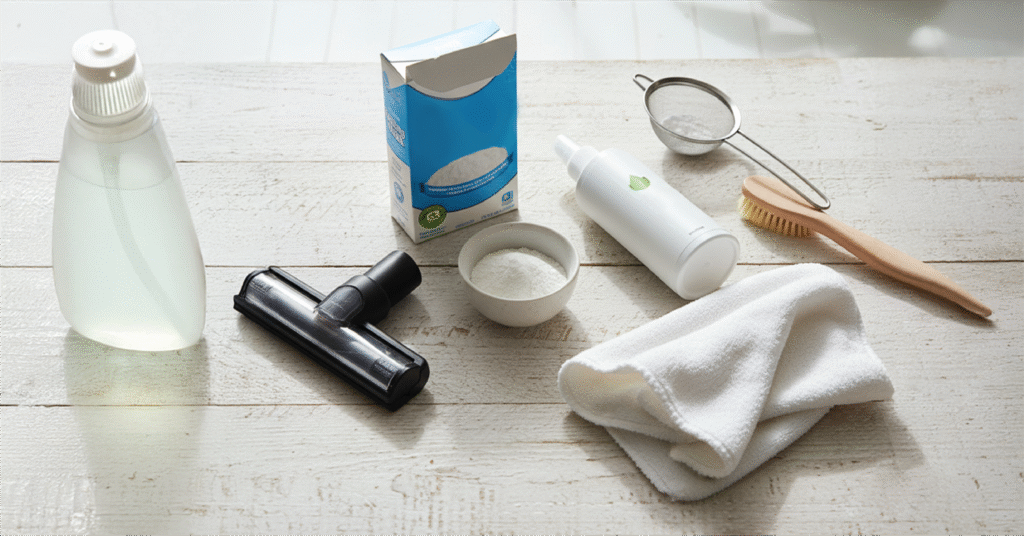
Where Can I Buy Mattress-Cleaning Supplies?
To deep clean bed fabrics, you don’t need to search for expensive and chemically harsh supplies. Most of them are affordable household cleaning staples available online or at your local supermarket. Let us discuss the supplies you’ll need for each of the five cleaning methods, complete with price ranges:
For the Baking Soda Deodorizer Method (Method 1)
This method requires just two basic items to deodorize mattress surfaces:
Baking Soda
This is an essential household item for absorbing odors and moisture.
- Price Range: $2-$12
- Look For: Arm & Hammer Baking Soda
Upholstery Vacuum Tool
This tool helps you remove dust, debris, and the baking soda itself:
- Price Range: Often included with your vacuum cleaner with upholstery attachment.
- Look For: If you need a replacement, search for “upholstery vacuum attachment” compatible with your vacuum model.
For the Enzyme Cleaner Method (Method 2)
This is the go-to method for organic stains like urine, sweat, and vomit.
Enzyme Cleaner
This is a targeted mattress stain remover that breaks down protein-based stains.
- Price Range: $6-$15
- Look For: Nature’s Miracle Advanced Stain and Odor Eliminator
For the Oxi/Peroxide Paste Method (Method 3)
This DIY paste helps remove tough stains that set in on the fabric of the mattress.
3% Hydrogen Peroxide
This is an active ingredient for lifting yellow and blood stains.
- Price Range: $1-$4
- Look For: McKesson Hydrogen Peroxide 3%
Mild Dish Soap
This soap helps to break down grease and lift stains.
- Price Range: $3-$6
- Look For: Mrs. Meyer’s Clean Day Liquid Dish Soap
Spray Bottle
You can buy a spray bottle for applying cleaning solutions without oversaturating the mattress.
- Price Range: $2-$8
- Look For: Harris Professional Spray Bottle
White Microfiber Cloths
Use a microfiber duster or cloth for blotting stains without transferring the color of the mattress.
- Price Range: $6-$15 for a multi-pack.
- Look For: AmazonBasics Microfiber Cleaning Cloths
For Optional Steaming and Drying
Steaming and Drying tools make your cleaning routine easier. They help you sanitize the mattress and dry it out quicker than the airing-out method.
Garment/Upholstery Steamer (Optional)
This is used to disinfect mattress surfaces with heat.
- Price Range: $25-$70
- Look for: Conair Turbo ExtremeSteam Handheld Fabric Steamer
Dehumidifier or Box Fan (Optional)
This is important for knowing how to dry a wet mattress quickly and prevent mold.
- Price Range: $20-$150, depending on the model.
- Look For: Lasko Cool Colors 20″ Box Fan or hOmeLabs Energy Star Dehumidifier
For General Mattress Protection
You can invest in a waterproof or organic protector for your mattress that prevents surface-level stains and allergens.
Mattress Protector/Encasement
This is a must-have for dust mite prevention and safeguarding against spills.
- Price Range: $20-$70
- Look For: Waterproof Mattress Protector
How Much Does It Cost to Clean a Mattress?
The total cost depends on whether you use simple DIY methods or hire professional cleaning, as explained below:
DIY Cleaning
For this, you use cheap and basic supplies like white vinegar, soda, or enzyme cleaner. These may cost between $10 and $50 and can be bought from local retailers. Other items like dish soap and a vacuum are readily available, eliminating extra out-of-pocket costs.
Professional Cleaning
For deep cleaning and sanitizing the mattress, you can opt for professional cleaning. Depending on your mattress size, type of stain, and location, it may cost around $80-$200 per mattress.
Best Value
The DIY method gives the best value for regular maintenance and refreshing your mattress. However, we advise you against using DIY pesticides. Hire a professional for severe contamination or to clean bed bugs mattress.
How Do I Clean Different Mattress Types?
Different mattress materials require specific care to avoid damage. Here are guidelines on how to deep clean a memory foam mattress and other materials:
Memory Foam
For memory foam care, avoid soaking it completely. This is because moisture can get trapped and degrade the foam further. You can spot-clean with a damp cloth and mild soap, and air-dry it before using it.
Latex
Like memory foam, latex mattresses must also not be soaked with water. Use a mild soap and water solution for spot-cleaning. Avoid harsh chemicals and direct heat or sunlight, as they break down the natural latex.
Innerspring/Hybrid
These mattresses use a coil structure that creates airflow channels for breathability. However, you must avoid soaking these too, as moisture may reach the inner springs and cause rust or mildew.
Pillow-top
The plush top layer is more absorbent and prone to stains. Hence, blot stains immediately pillow top mattress instead of scrubbing the stain hard. Vacuum it regularly to keep the top layer clean and smelling fresh.
Futons/Guest Mattresses
Most people use futons as seating space, and hence, they may get dirty. Air them out in the sun to kill bacteria and remove bad odor.
What’s the Average Time to Clean & Dry?
Let us discuss how often should you clean your mattress and the time it takes:
- Active Cleaning: vacuuming and spot-treatment is the immediate hands-on method. It takes barely 20-45 minutes.
- Deodorize/Dwell Time: For the baking soda mattress cleaning method, you’ll need to let it sit for 4-8 hours to absorb odors and moisture.
- Drying Time: A spot-cleaned area might dry in 4 hours, but a more thoroughly cleaned mattress can take up to 12 hours or longer. The time depends on the room’s ventilation, humidity, and airflow factors.
How Do I Keep My Mattress Fresh Longer?
For improved durability and long-term wellness benefits, regular mattress maintenance goes a long way. Let us discuss a few tips to maintain bedroom hygiene and freshness:
- Rotate Your Mattress: This makes sure you use the entire surface effectively by reducing surface wear. You can rotate it 180° every 3-6 months to prevent sagging from body impressions.
- Use a Washable Protector: A mattress protector helps create a fabric layer above the fabric of mattress. It works like a barrier against sweat, spills, dirt, and allergens. Invest in a washable one to maintain its cleanliness.
- Perform Regular Maintenance: Once a month, vacuum the mattress thoroughly. This will free the mattress from any invisible dust, debris, or dead skin cells. If looking for how to remove urine smell from a mattress, use the baking soda method every 1-3 months. This will uproot the stench gradually.
- Practice Good Habits: To reduce the buildup of body sweat and oil in the mattress, take a shower each night before winding down for bed. Additionally, avoid eating or drinking in bed, and every morning, air the mattress for 20 minutes to dry it out.
Clean Your Mattress Now!
When looking for solutions on how to clean a mattress, you must first understand whether cleaning at home is your best option or opting for professional services. The type of stain and your mattress’s construction (all-foam or hybrid) also play an important role in the cleaning decision. Start by controlling the bad smell with baking soda.
For cleaning urine and vomit, use an enzyme cleanser to break down the organic matter and remove the stain. For tougher stains like blood or a yellow tinge, make diy peroxide paste, but use it with spot treatment. You can use low-heat steam if your mattress manufacturer explicitly approves it. Finally, air the mattress out regularly in sunlight and fresh air to eliminate moisture naturally. To make sure your sleep sanctuary is hygienic for restorative slumber, include these five methods in your regular care schedule.