When you purchase through our links, we may earn a commission at no extra cost to you. As an Amazon Associate, DreamSlumber earns from qualifying purchases. Learn more.
To sleep with cervical pain, use a pillow with the right height to keep your spine neutrally aligned. To avoid twisting your lower back, sleep on your back or side, and before bed, relax your muscles with the help of a wind-down routine. You need consistent support and a few lifestyle changes to feel a reduction in pain over several weeks. However, when the painful symptoms persist, such as numbness and tingling, seek professional medical evaluation.
You settle in for the night, yet the moment your head hits the pillow, a sharp pain in your neck makes it impossible to rest. This nightly battle with neck pain can make it difficult for you to fall asleep through the night. That is why you must know how to sleep with cervical neck pain with just a few lifestyle changes and targeted adjustments. These include sleeping in the correct position, maintaining good posture, and investing in high-quality support.
Your cervical spine is made up of vertebrae C1-C7, and it requires adequate structural support to stay neutrally aligned. However, many standard setups with a wrong pillow fail to provide this support, and an incorrect sleeping position can worsen the painful situation. Moreover, a mattress with insufficient firmness can give your body constant muscle tension to protect the spinal structures. This strain further leads to irritated nerves and chronic fatigue. So, continue reading this step-by-step guide to understand the right ergonomic adjustments and physical therapy to get the nightly relief you need.
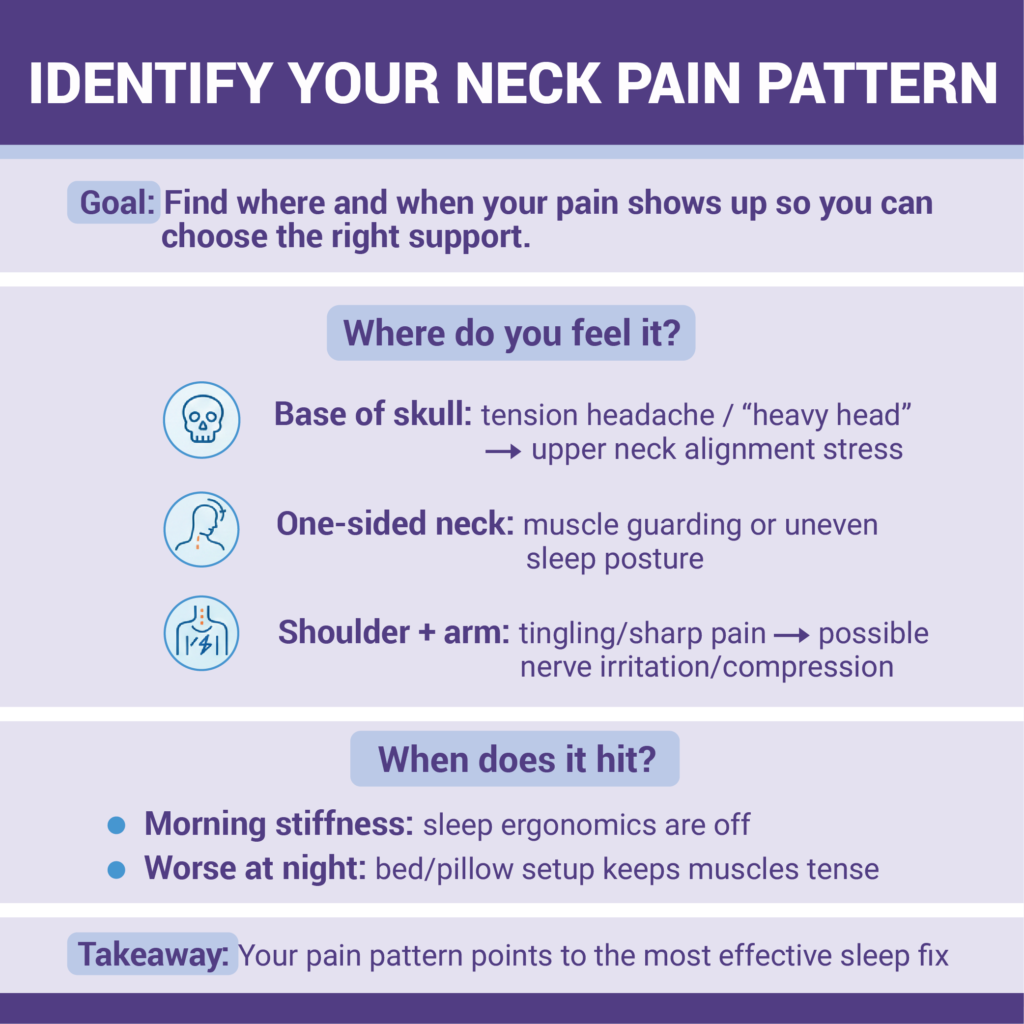
Step 1: Identify Your Specific Cervical Neck Pain Pattern
To find the personalized approach for dealing with your cervical pain, first understand when and where your discomfort emerges from. The neck pain while sleeping does not have a standard solution, so generic treatment may not work. That is why you must pay close attention to your pain patterns and determine the most suitable support strategies for your body.
Check if you experience pain in:
- Base of Skull: Pain in this area manifests as tension headaches or a heavy-like feeling at the top of your neck. This may show inadequate cervical spine alignment or stress in the upper cervical joint.
- One-sided Neck Pain: If you notice pain on one side of your neck, it may be due to muscle guarding (muscle tension to prevent the spine). It may also be due to an asymmetrical sleep posture that can strain one side of the neck.
- Shoulder and Arm: If you experience tingling or sharp pain that travels down to your arm, this can be due to nerve irritation or compression during sleep.
The next important factor is the time of occurrence of pain, whether it happens when you wake up or at night.
- If you feel your neck is stiff in the morning, this points to poor sleep ergonomics at night.
- If the neck pain worsens at night, this means your bed setup may be inadequate and keeps your muscles tensed instead of letting them relax.
These patterns may also stem from specific health-related issues, such as chronic conditions like osteoarthritis. By understanding these pain triggers, you can target the right sleeping solution to manage your neck pain.
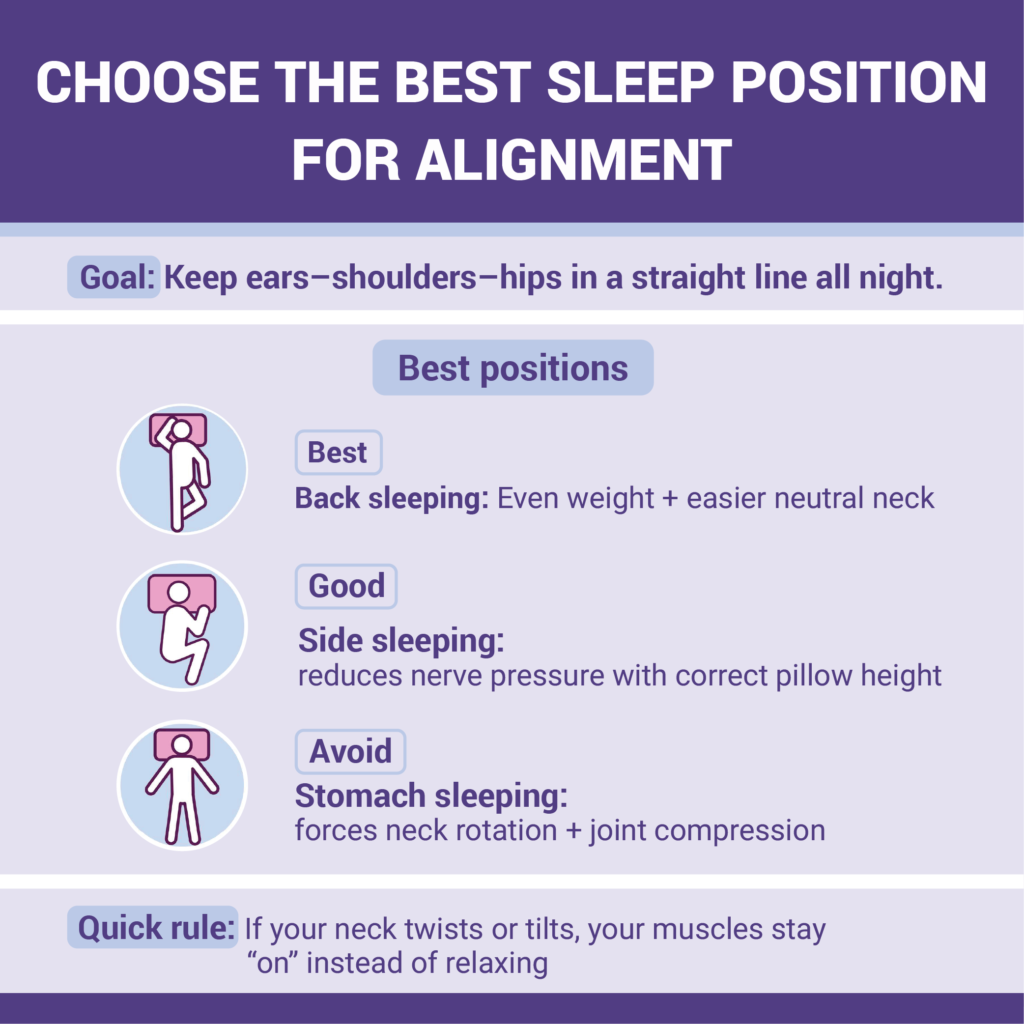
Step 2: Choose the Best Sleep Position for Cervical Spine Alignment
To minimize the pain at night, your next step should be to keep your spine neutrally aligned through the night. This means your ears, shoulders, and hips should remain in a straight line. When you achieve the proper spinal alignment during sleep, it reduces neck muscle tension and lets your muscles and brain relax to fall into deep sleep. This further prevents the tissue strain that may lead to chronic soreness.
The following are the best sleeping positions to relieve neck pain:
Back Sleeping
This position works best for neck pain as it helps with the even distribution of weight on the sleeping surface. Back sleeping with neck pain must be combined with the ideal cervical pillow support. This helps you achieve the natural curve of your neck without forcing your head towards your chest, preventing back sleeping neck pain.
Side Sleeping
Many people find relief side sleeping with cervical neck pain, as it can reduce pressure on sensitive nerves. You can also use a neck support pillow with adequate loft such that it fills the gap between your shoulder and head. This will prevent your neck from tilting or twisting. If you suffer from hypermobility, you can add a body pillow to brace your body comfortably to minimize side sleeping neck pain.
Stomach Sleeping
Most of the health experts do not advise this sleeping position as it may force your head into unnatural rotation at night. It also compresses the cervical joints and overstretches the opposite side’s muscles, adding to stomach sleeping neck pain.
Sleeping position comparison table:
| Position | Cervical Stress Level | Recommendation |
| Back | Low | Highly recommended as it keeps the head and neck neutral. |
| Side | Moderate | Recommended with a proper pillow loft to fill the shoulder gap. |
| Stomach | High | Avoid, as it causes extreme rotation and neck muscle tension. |
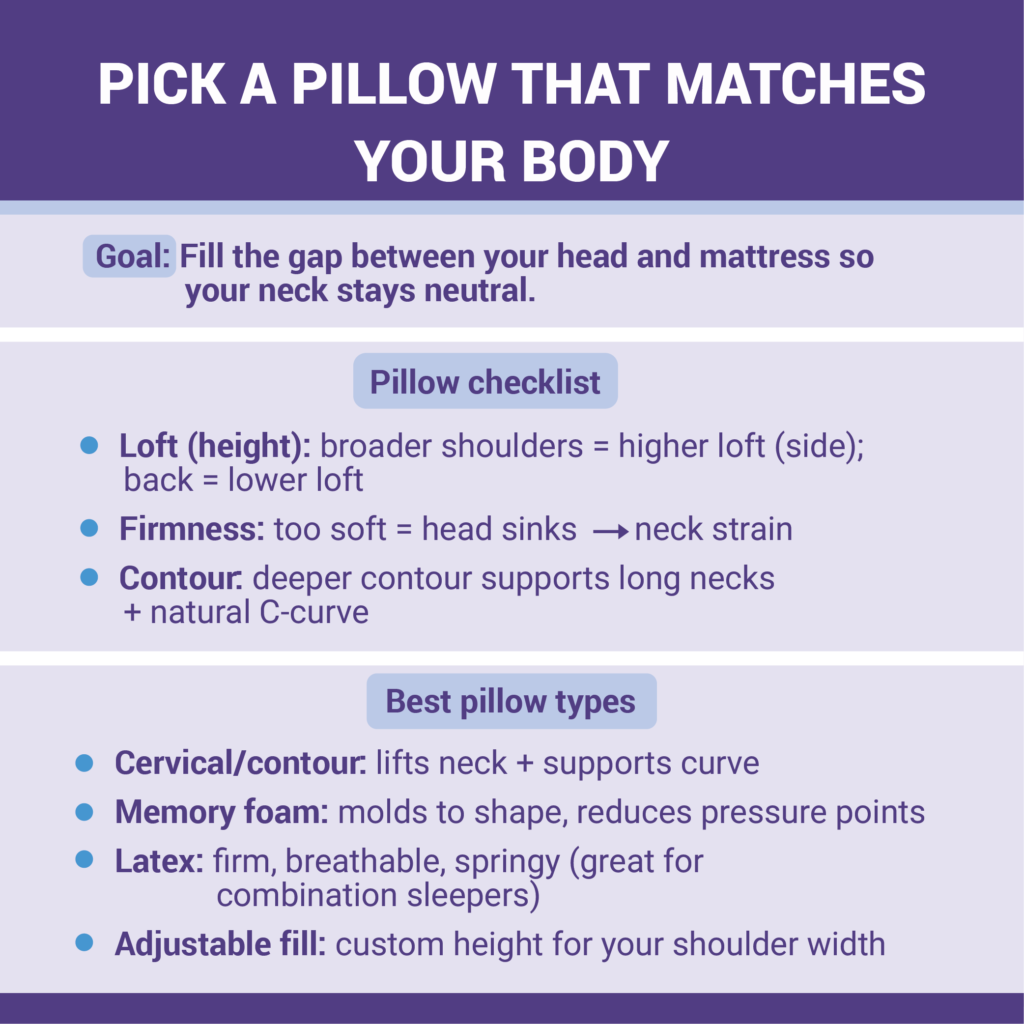
Step 3: Select a Pillow That Matches Your Body and Sleep Style
To get the right amount of support, you need a pillow with suitable loft to fill the space between your head and the mattress. This keeps your neck from bending at unnatural angles while you are sleeping. Before investing in the best pillow for cervical neck pain, first understand how a pillow’s construction and design work with your anatomy and sleep posture:
Pillow Loft
This component lets you evaluate the height of the pillow. For those with broad shoulders who prefer to sleep on their side, choose a higher loft to keep your head in place. Otherwise, back sleepers can invest in a cervical pillow with lower loft to keep the head from getting pushed too far.
Pillow Firmness
By understanding the firmness, you can ensure the material does not make your head shift under its weight. A too soft pillow will not provide consistent support to the neck, causing more muscle tension and a stiff neck in the morning.
Pillow Contour
This factor helps you determine the shape of the pillow’s surface. If you have a long neck, buy a cervical pillow with a deeper contour. This will fill the space between the base of the skull and the shoulders to maintain the natural curve of the spine.
Other than these physical features of the pillow, you must also focus on its material. This will help you determine how it will react to your movements and body heat at night. Choose these pillows to manage your chronic neck pain at night:
- Cervical Pillows: These feature orthopedic designs that have contour to embrace your head and raise your neck. This further aids in maintaining spinal alignment during sleep.
- Memory Foam: Pillows with memory foam construction are responsive and conform to the shape of your head and neck. These also help distribute weight evenly, minimizing the pressure on nerves.
- Latex: Natural latex is more breathable than memory foam, providing a firm and bouncy support without sagging. This is best for combination sleepers.
- Adjustable-Fill: In these, you can manually add or remove shredded foam or microfiber. This gives you control over the pillow height to suit your shoulder width.
Pillow types and their benefits:
| Pillow Type | Best Sleep Position | Cervical Support Benefits |
| Cervical/Contour | Back and Side | Actively lifts the neck to maintain the natural C-curve. |
| Memory Foam | Side and Back | Contours to your shape to eliminate pressure points and neck muscle tension. |
| Adjustable-Fill | All Positions | Allows for a custom pillow loft to match any shoulder width. |
| Latex | Side and Back | Provides firm, durable support that maintains cervical spine alignment all night. |

Step 4: Fine-Tune Pillow Placement and Neck Support
Once you have figured out your pain symptoms and the pillow types, the next step is to understand how to support neck while sleeping. You need a proper support system to make sure your cervical pillow works effectively at night. One of the common mistakes that people make is resting only the head on the pillow. This may result in an unsupported neck as it remains suspended in mid-air. To overcome this, you require the right sleep ergonomics:
- Make sure the bottom edge of your pillow is tucked properly against the top portion of your shoulders. This will help the pillow hug the neck’s curve.
- When sleeping on your back, enhance the support by using a towel roll neck support (3-to 5-inch diameter) under the neck area. This will fill the empty space under your spine.
- For those who shift positions at night, find the right memory foam mattress that conforms to your body’s curve and use it with an adjustable pillow to get the custom support.
Pillow Positioning Checklist
- Is the edge of the pillow tucked against your shoulders?
- Is your chin level, neither tucked to your chest nor tilted toward the ceiling?
- Can you feel the pillow (or cervical towel roll) supporting the entire curve of your neck?
- If you are on your side, is your nose aligned with the center of your chest?
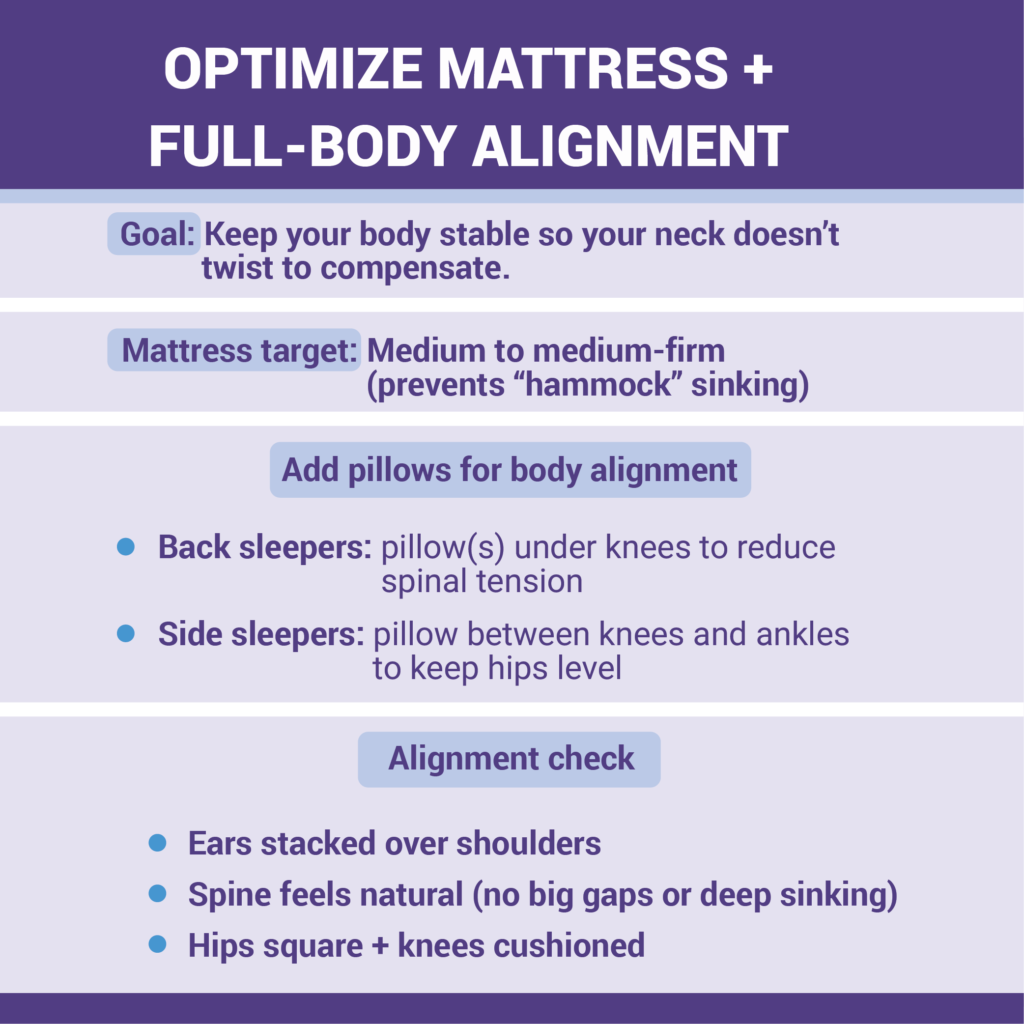
Step 5: Optimize Your Mattress and Full-Body Alignment
If your mattress is too soft, it may lead to the sinking of your heavier midsection deep into the mattress. This creates a hammock-like effect that forces your neck into an awkward twist with a painful forward position. If you are already suffering due to cervical pain, you need a medium to medium-firm mattress to get the best amount of pressure relief and structural support.
Additionally, you can use extra pillows to make your body’s frame stable and reduce tension in the neck muscles from head to toe. This is how to set up bed for neck pain:
For Back Sleepers
Take one or two pillows and place them under your knees to flatten the lower back against the mattress. This keeps your hip flexors from tugging on your spine and further reduces overall tension in your upper back and neck.
For Side Sleepers
Place a firm pillow beneath the area between your knees and ankles. This keeps your hips in a neutral line and keeps your pelvis from rotating. The adjustment also supports your spine with the help of correct body pillow alignment.
Full-Body Alignment Checklist
- Ears and Shoulders: Are they stacked vertically (side) or level (back)?
- Spine Curve: Is your lower back resting naturally without a large gap or excessive sinking?
- Hip Stability: Are your hips level and square, supported by a pillow if needed?
- Knee Support: Are your knees slightly bent and cushioned to offload spinal pressure?
Step 6: Use Pre-Sleep Routines to Reduce Muscle Tension
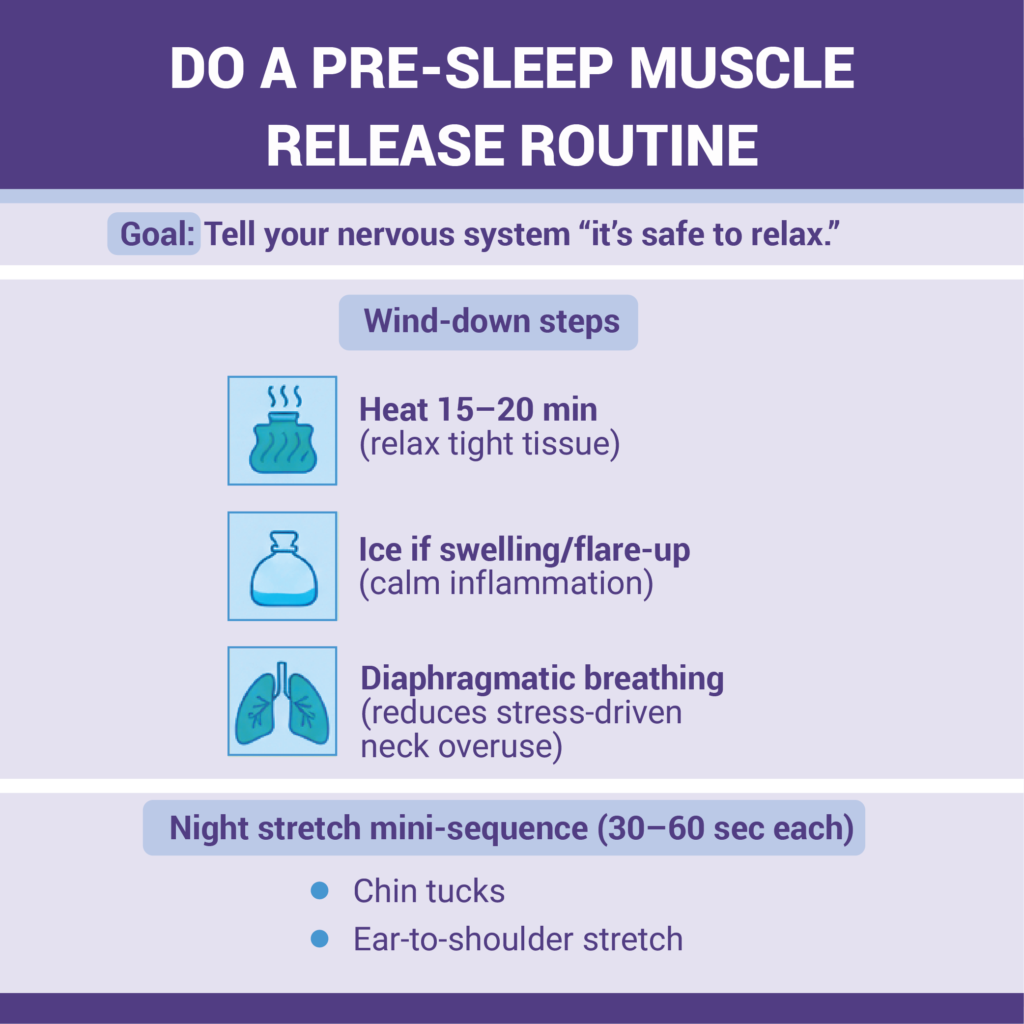
After you have worked on your posture and added the right support to your neck and shoulders, it is time to focus on your daytime activities. You need a relaxing pre-sleep routine to release the muscle tension and fatigue from working during the day. A calming wind-down ritual tells your nervous system to let go of the control and relax the muscles to rest at night.
Follow these steps:
- Start by applying gentle heat for 15-20 minutes to increase blood flow and relax tight tissues.
- If you are experiencing a recent flare-up with swelling, use ice instead to numb the area and reduce inflammation.
- Follow this with diaphragmatic breathing (belly breathing). This has been scientifically shown to reduce the overactivity of neck muscles that we often overuse when stressed.
Nightly Stretch Sequence (Hold each for 30-60 seconds):
- Chin Tucks: Gently draw your chin straight back (as if making a double chin) to decompress the upper neck joints.
- Ear-to-Shoulder: Slowly tilt your head to one side without shrugging your shoulders to release the lateral neck muscles.
- Shoulder Blade Squeezes: Draw your shoulders back and down to open up the chest and counteract the “slouch” of daily desk work.
You can perform these stretches along with meditation and deep breathing exercises to lower the sympathetic tone of your body and prepare for a sound sleep.
Step 7: Modify Nighttime Habits That Aggravate Cervical Pain
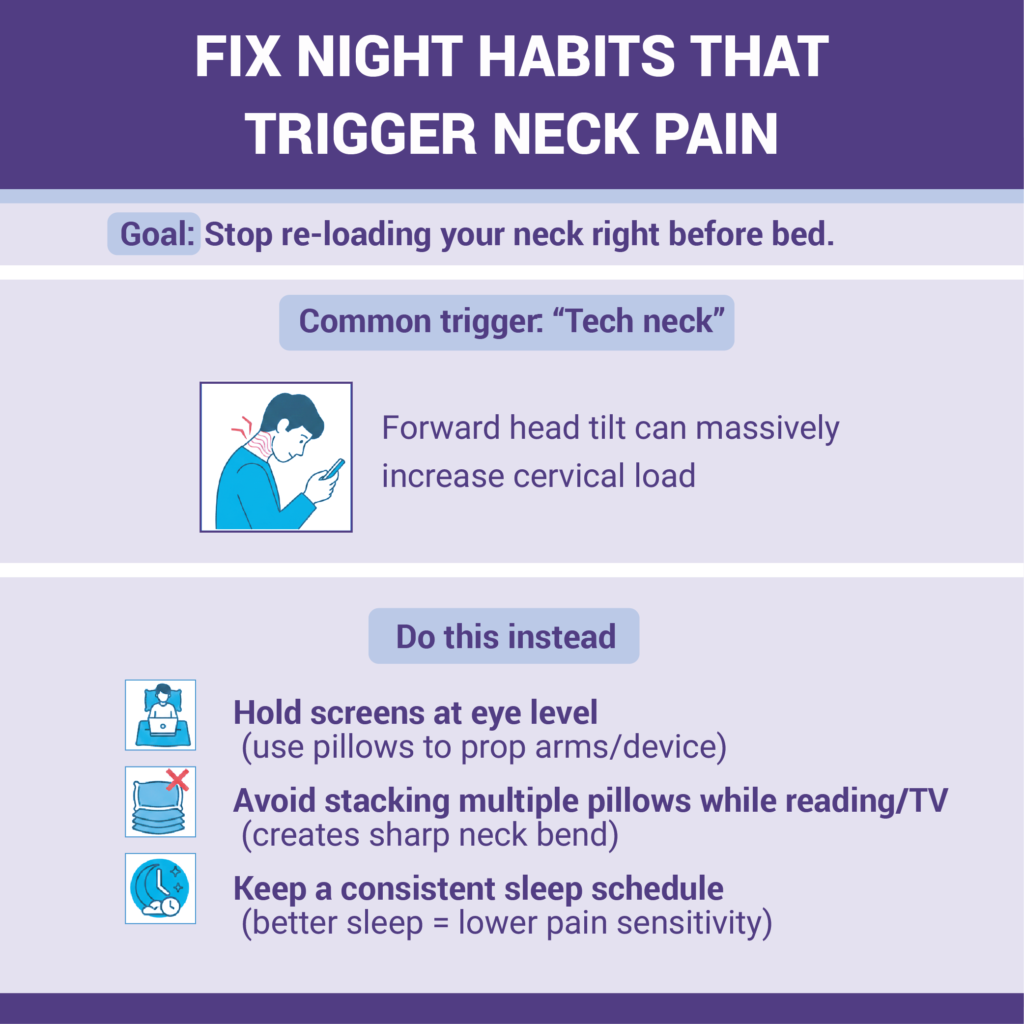
Many of us lead a busy lifestyle where we overuse our smartphones and laptops, which results in giving us a ‘tech neck’. This is a condition in which your head’s weight (10-12 pounds) may put up to 60 pounds of pressure on your cervical spine. It often occurs when it remains tilted forward at a 60-degree angle while using phones or tablets in bed. This uncomfortable position puts your neck into unnatural flexion, causing tension in neck muscles that stays the same while you sleep.
To prevent this:
- Avoid Screen Tilting: If you have to use a device at night, keep it up at eye level using a body pillow alignment. This will ensure your head remains neutral.
- Skip the Pillow Stack: If you use multiple standard pillows while reading or watching TV in bed, it may lead to a sharp bend in the neck.
- Consistent Sleep Schedule: Recent research shows a connection between poor sleep quality and increased sensitivity to musculoskeletal pain. That is why you must create a regular bedtime and waking-up schedule to lower systemic inflammation.
By making these small behavioral adjustments, you make sure your setup is working for you to improve the neck pain in the long term.
Step 8: Monitor Progress and Know When to Seek Medical Care
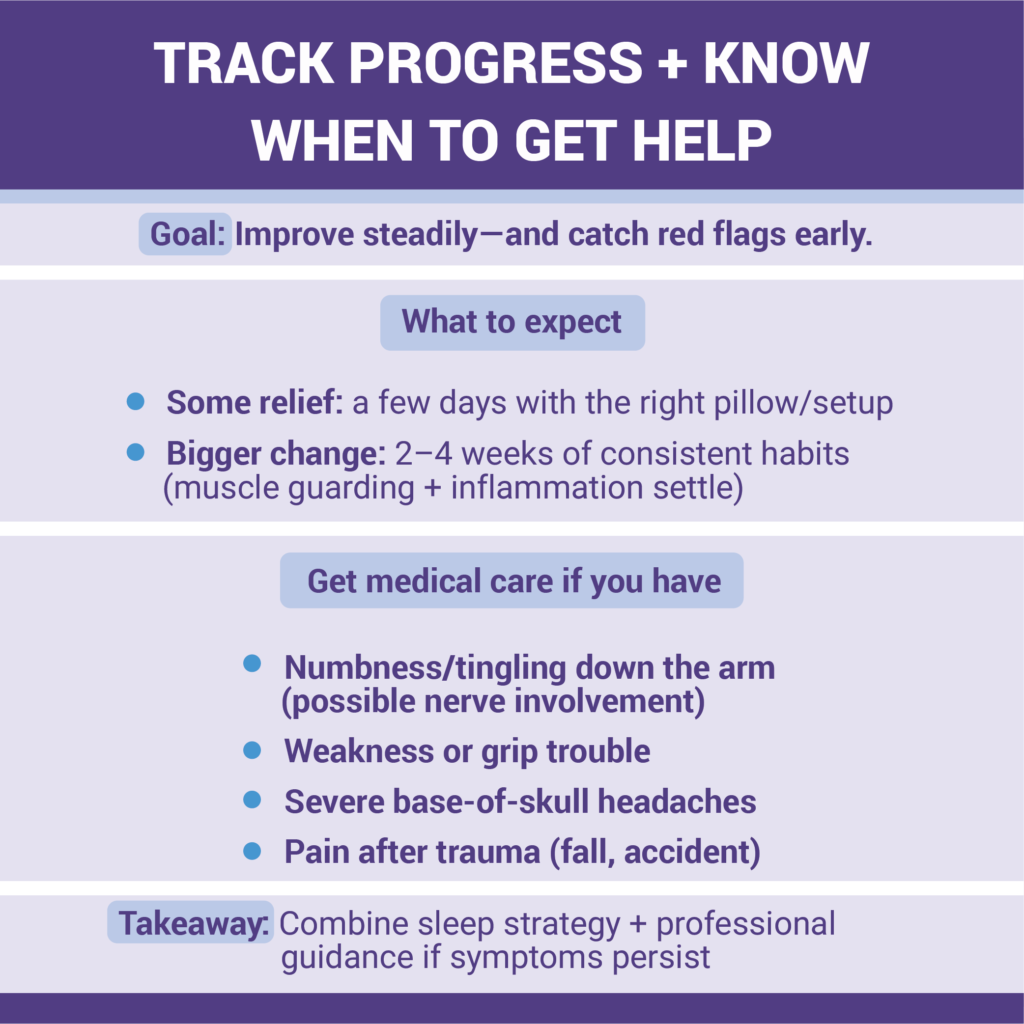
When dealing with cervical neck pain, you must acknowledge that it will take time to heal, and there is no overnight fix to manage it. Depending on the pain level, some may notice improvement within just a few days with a cervical pillow or slight adjustments. For many, it usually takes about 2 to 4 weeks of consistent habits for muscle guarding and inflammation to completely reduce.
However, for some people, these small adjustments may help manage nighttime symptoms. And if you do not notice any improvements, it is important to consult an orthopedic specialist or a physical therapist.
Here are some of the specific symptoms that indicate structural issues:
- Numbness or Tingling: If you feel sharp “pins and needles” going down the arms, it may be due to cervical radiculopathy, sleep complications, or a herniated disc.
- Muscle Weakness: If you find it difficult to grip an object or feel heaviness in the arms, this could be due to nerve compression.
- Severe Headaches: Experiencing frequent aches at the base of the skull may be due to arthritis in the upper cervical joints.
- Trauma-Related Pain: If your pain started after an injury, such as a fall or car accident, go for professional evaluation to rule out instability.
Add these proactive sleep strategies with professional guidance when needed to create a fool-proof recovery plan.

Frequently Asked Questions
What is the best sleeping position for cervical neck pain?
Sleeping on your back or on your side is the most effective sleeping position to deal with cervical neck pain. These positions help you maintain a neutral spine to align your head, neck, and back. The most preferred position is back sleeping because it distributes your weight evenly. Side sleeping is a good alternative if you use a thick pillow that keeps your neck from tilting. Avoid stomach sleeping, which forces the neck into a strained rotation for hours.
How high should my pillow be for neck pain?
The ideal height of your pillow depends on your preferred sleeping position and the width of your shoulders. If you are a side sleeper, you need a pillow with a higher loft that fills the gap between your ear and your shoulder. Whereas, if you are a back sleeper, to keep your head from getting pushed forward, you require a lower loft pillow.
Can sleeping without a pillow help cervical neck pain?
For some back sleepers, sleeping without any pillow may help minimize neck pain. However, it may cause the head to drop too far back, which flattens the natural neck curve. Most experts recommend using a thin pillow or a small towel roll to lift the cervical spine. For most people, a total lack of support leads to increased muscle strain overnight.
How long does it take for neck pain to improve after changing sleep posture?
Depending on the severity and level of your cervical pain, some may notice improvements within just a few days or within 2-4 weeks. It may take over a month for your body to adapt to the new adjustments in your bed setup. The process will take time as your muscle memory will unlearn the old patterns to fully relax.
Are cervical pillows better than regular pillows?
Cervical pillows are specifically designed with orthopaedic contouring to give you relief from chronic neck pain. The shape of the pillow supports the neck’s natural curve, and many standard pillows keep the neck unsupported. By using these pillows, you fill the space under your spine and neck, helping your body stay stable at night.
Should I wear a neck brace or collar while sleeping?
Most of the experts advise against wearing a neck brace or collar while sleeping. However, you can use it if it is prescribed by your clinician or therapist and you suffer from a fracture or instability. It is best to avoid it as its long-term use can weaken the muscles in your neck over time. It may make you more prone to pain in the future.
When does neck pain during sleep indicate a serious problem?
If your pain symptoms persist despite following the best practices to manage your neck pain, it can become a serious concern. Moreover, if it is accompanied by signs of numbness, tingling, or weakness in your arms and hands, you need immediate professional consultation. These may be due to underlying issues like a herniated disc or nerve compression. Further, if your pain is severe and you are noticing it after a recent injury, it is best to get it evaluated by a specialist.
Conclusion
This guide on how to sleep with cervical neck pain helps you target the right approach through sleep adjustments and pillow additions. To get started, first understand the cause of your nagging ache and where and when you feel it the most. The next step is to make sure your head, neck, spine, and pelvis stay in neutral alignment throughout the night. To achieve this, you must follow the recommended back or side sleeping position and add the right pillow support. These help reduce muscle tension to help you fall asleep for recovery. Make sure the height of the pillow is according to your shoulder width, and the mattress has ideal firmness to prevent spinal sagging.
If your symptoms persist or show signs of numbness, seek guidance from a physical therapist or a specialist in orthopedic care. So, to deal with your neck pain, reassess your current setup tonight and start with small changes.