




When you purchase through our links, we may earn a commission at no extra cost to you. As an Amazon Associate, DreamSlumber earns from qualifying purchases. Learn more.
Hypermobility spectrum disorders (HSD) and hypermobile Ehlers-Danlos syndrome (hEDS) affect the body’s connective tissue, which gives structure and support to joints. When this tissue is naturally softer or more elastic than usual, the joints move beyond their typical range. This increased movement is called hypermobility. Living with this condition can lead to chronic pain, subluxations (slight dislocation of joints), and insomnia due to pain. That is why it is important to understand how to sleep with hypermobility.
In this condition, gravity pulls your joints into painful angles, triggering your nervous system to perceive this as a threat. To help you manage such symptoms, this guide will give you expert-backed strategies. You will learn how to build a pillow support system, make changes in your bedding, and prepare a calming routine to target restorative rest.
(Note: This guide provides general tips and does not replace medical advice from your doctor.)
How to Sleep with Hypermobility: Proven Methods for Supportive, Less Painful Rest
To get relief with deep sleep, you need a support system in your bedroom that can hold your body in place. Additionally, you need a calming routine to manage pain flares and protect your nervous system. Let us discuss 7 expert-backed Ehlers-Danlos syndrome sleep tips on how to manage nighttime pain flares with joint hypermobility:
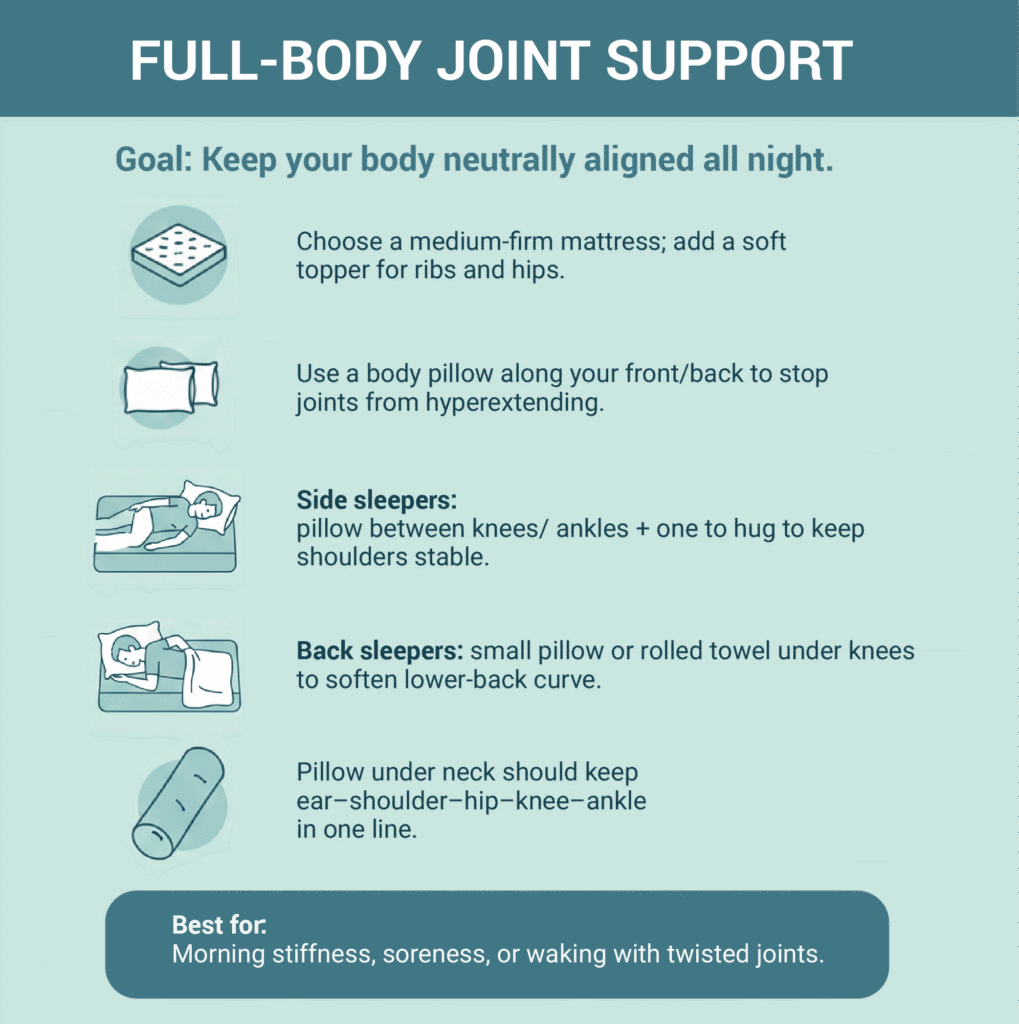
1. Full-Body Joint Support (Foundational Setup)
When looking to manage your morning stiffness and pain symptoms, your first goal should be to create a supportive sleep environment. Your mattress, bedding, and pillows must keep your body neutrally aligned while preventing joint instability at night. Here is how you can build a setup for joint hypermobility that supports your legs, hips, and shoulders:
- Use a medium-firm mattress that keeps your spine in line with the rest of your body. You can also use a softer pressure-relief mattress topper to cushion ribs and hips.
- Invest in a quality body pillow and keep it along your back and front to support your joints and keep them from hyperextending.
- If you are a side sleeper, keep a firm pillow between your knees and ankles. This will keep your limbs from pulling your hips downward. You can also hug a pillow by your chest to keep your shoulders together and prevent them from collapsing.
- For back sleeping, use a small pillow or rolled towel beneath your knees to flatten the lumbar curve and reduce the tension from hip flexors.
- Place your neck pillow so it fills the space between your ear and the mattress, keeping your ear and shoulder aligned. If your head tilts up or down, the pillow is straining your cervical ligaments instead of keeping your airway open and your spine neutral.
Best For: Those with generalized hypermobility who struggle with morning stiffness, soreness, or have twisted joints when they wake up.
Notes: Make sure that your ear, shoulder, hip, knee, and ankle stay in the same straight line to keep your joints safe. Start by adding pillows to fill the gaps, and from there, build your step gradually.
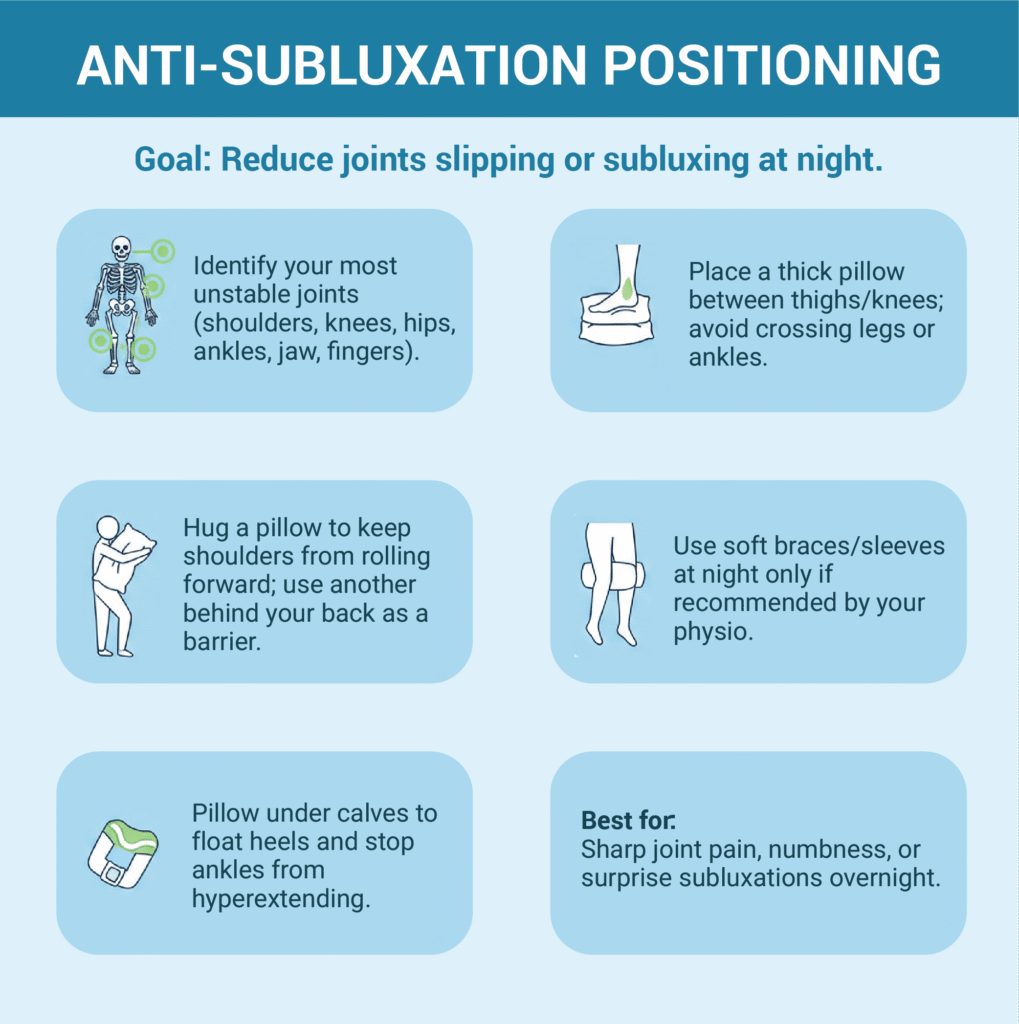
2. Anti-Subluxation Positioning (Stability Setup)
If your hypermobility makes the joints in your shoulders, hips, or jaws feel loose, clicky, or sublux out of alignment, you need a stability setup. You can achieve this by using soft containment strategies that do not lock your body in the same position.
Let us discuss tips on how to stop joints from subluxing at night:
- Start by identifying the problematic points in your body. These can be the joints in your shoulders, knees, hips, ankles, fingers, or jaw.
- For unstable shoulders, use a pillow to hug, such that it prevents your shoulders from dropping forward. Use a second pillow against your back so it can act as a barrier to keep your body from rolling.
- For knee and hip alignment in bed, take a thicker pillow and place it between your thighs or knees to keep your hips in line. Additionally, make sure you do not cross your legs or ankles, as it may strain the pelvic ligaments.
- To support your ankles and feet, put a pillow under your calves to keep your heels up and keep your ankles from hyperextending from the edges.
- Use soft braces or supports at night (like compression sleeves or splints) if your physio has advised. Make sure these are not too rigid, as they may lead to stiffness. Softer supports give better sensory feedback.
Best For: People who face sharp joint pain, numbness, or unexpected subluxations that happened overnight.
Notes: Make sure your containment method is soft on your joints so it does not impact your blood circulation.
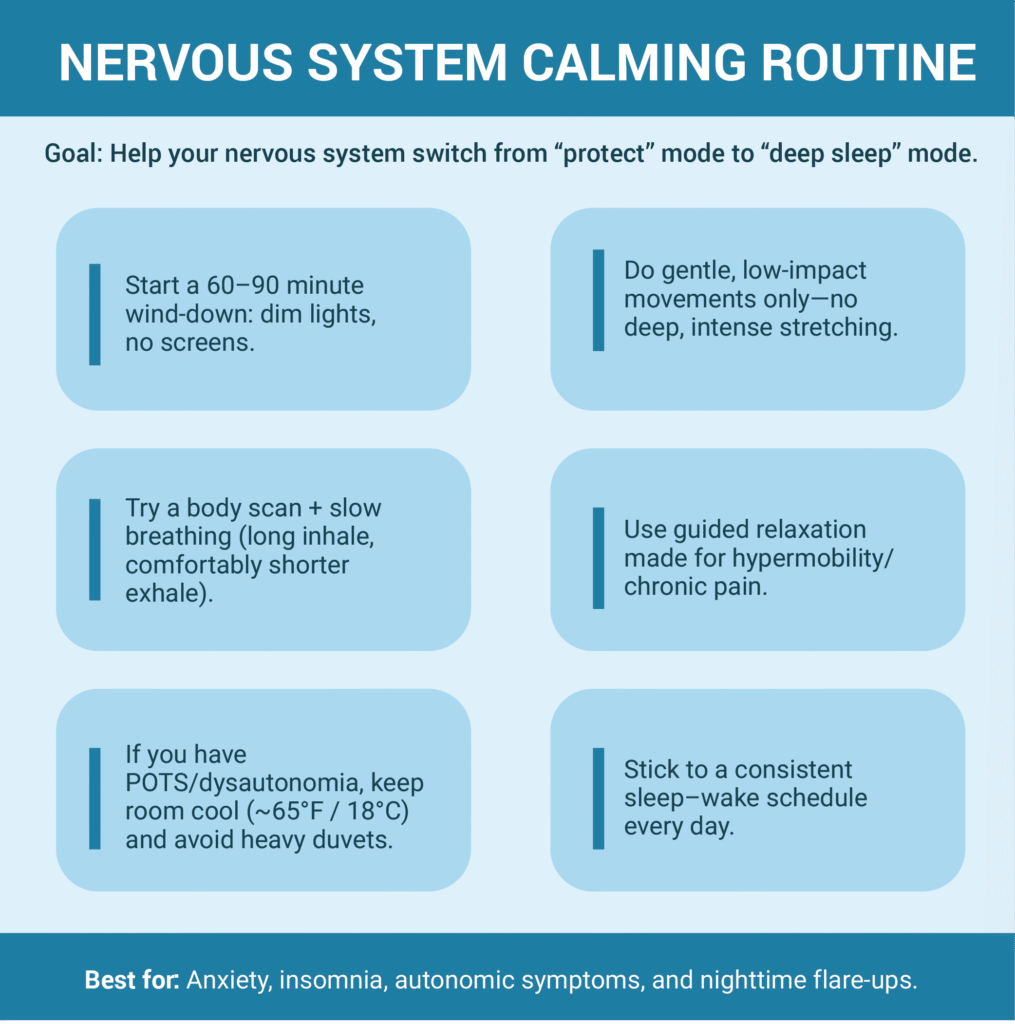
3. Nervous System Calming Routine (Sleep Hygiene for Hypermobility)
Chronic pain and sleep hygiene impact your anxiety, which further affects hypermobility in your joints. If your joints are not stable, your nervous system remains active, using muscles to protect you. This makes getting into deep sleep difficult for your tired body.
Let us discuss how you can create a bedtime routine for hypermobility and chronic pain:
- Set a wind-down routine at least 60 to 90 minutes before bed. Switch off your screens and bright lights, as hypermobility is sensitive to stimuli.
- Do low-impact bedtime stretches (not intense stretching) or gentle mobility exercises. Keep the movement minimal and stop if it causes any pain.
- Perform a body scan while resting on the bed. Then, do breathing exercises by inhaling for a long duration and follow it with a shorter exhale.
- You can also use hypermobility-specific guided meditation that loosens your tight muscle tissues.
- If you suffer from Dysautonomia (POTS), overheating can worsen your pain at night. Hence, keep the room around 65°F/18°C and invest in a cooling mattress.
- To avoid subluxations, go for weighted blanket alternatives that give light pressure on joints. Avoid using a thick and heavy duvet.
- Follow your sleeping time table religiously by going to bed and waking up at the same time every day. This will improve your body’s internal clock.
Best For: Those suffering from autonomic dysfunction and insomnia, anxiety, POTS/dysautonomia, or nighttime flare-ups.
Notes: A clinical study shows that calming your nervous system and managing your stress can help lower the perceived pain.
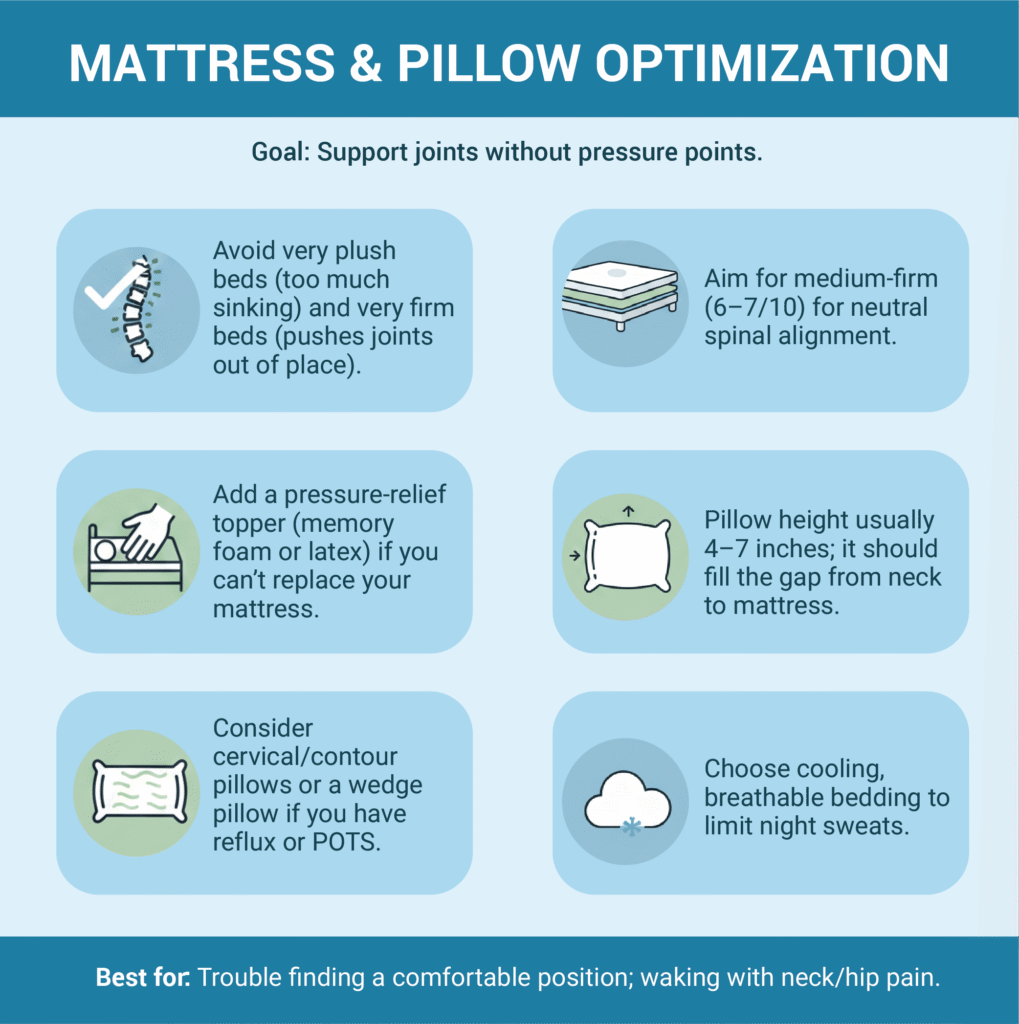
4. Mattress and Pillow Optimization (Equipment Setup
For managing your symptoms, you must customize your sleep environment by finding a suitable mattress for hypermobility, a mattress topper, and pillows. Create a setup that supports your body by holding your joints in place without sinking your hips. It must also be gentle enough to embrace your ribs and shoulders without creating painful pressure zones.
Here’s how to choose a mattress for hypermobility and support joints
- Avoid a plush mattress as it can over-extend your joints. It will make your heavy areas get stuck too deeply, twisting your spine and SI joints.
- An extremely firm mattress will push against your shoulders and hips, pushing your joints out of the socket.
- A medium-firm feel (6-7/10) works as an ideal mattress firmness for hypermobility. The flat base gives the best spinal alignment and the slightly soft surface conforms to your natural curves.
- Choose a pressure-relief mattress topper if you cannot buy a new mattress. You can buy a memory foam topper to get the contouring relief for your pressure points. A latex topper works if you prefer a responsive surface and cooling sensation.
- Place your pillow under your neck so your ear stays in line with the mattress and follows your natural cervical curve. Most people need a height between 4–7 inches, and broader shoulders may need a little more support.
- Use a cervical or contour pillow to stop your head from rolling sideways. If you deal with acid reflux or POTS, elevate your upper body with a wedge pillow for better comfort through the night.
- Buy temperature-regulating bedding, including cooling sheets and breathable fabrics, to avoid waking up from night sweats.
Best For: People who cannot get into a comfortable sleeping position or wake up with neck and hip pain.
Notes: Before spending a lot, start by making small changes and using a topper. This is cheaper and an effective alternative.

5. Flare-Up Night Strategy (When Everything Hurts)
When your body is in pain despite trying everything, focus on achieving rest first by calming your anxiety. For this, keep a flare kit ready and take simple steps to ease your pain.
Here is how to manage nighttime pain flares with joint hypermobility:
- Get your body in a zero gravity position by placing a wedge pillow behind your back to lift your torso and a pillow below your knees.
- Apply heat and cold packs to the painful joints to reduce spasms or numb the pain. (Check your tolerance level and use it if your therapist recommends it.)
- To manage your pain, change your position slightly instead of trying to stay in one position the whole night.
- Distract your brain from receiving pain signals by listening to an audiobook or practicing “cognitive shuffling” (visualizing random objects).
- If your sleep gets interrupted, focus on resting calmly by closing your eyes and taking deep breaths.
Best For: Those dealing with episodic flares, hormonal joint looseness (hEDS), or”painsomnia” (pain-induced insomnia).
Notes: Prepare a ‘flare kit’ for such painful nights. Include a heating pad, prescribed meds, earphones, extra support, and a cooling gel pack in it.
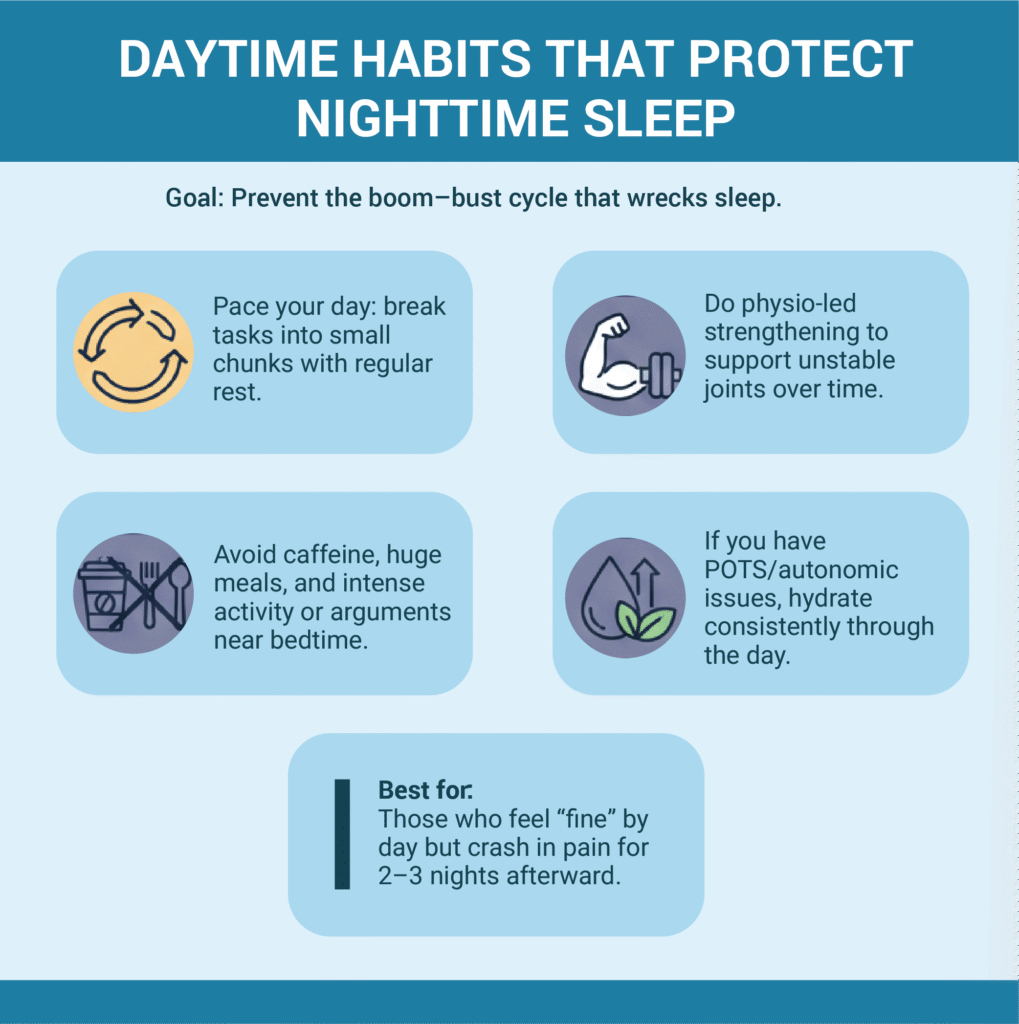
6. Daytime Habits That Protect Nighttime Sleep (24-Hour Method)
Hypermobility sleep problems are often triggered by your daytime activities. On a less painful day, you may overdo everything and end up being in pain for the next 2-3 nights. You must avoid this boom and bust cycle to let your body heal gradually.
Here is how you can maintain healthy daytime habits for a deep nighttime rest:
- Daytime pacing and activity before bed help you keep your pain symptoms in check. Break down your tasks into small sections and take appropriate breaks.
- To make sure your hypermobile joints stay stable, follow physio-led strengthening exercises. These exercises must be gentle to strengthen your muscles and support joints in the long term.
- Avoid consuming caffeine, large meals, or intense exercises/conversations right before bed. These may interrupt your body’s natural response to the sleep signals.
- If you experience autonomic dysfunction and insomnia, or POTS, keep yourself hydrated throughout the day. This helps maintain blood volume, reducing nighttime adrenaline spikes and increased heart rates.
Best For: Those who do not notice pain symptoms during the day but face harsh pain at night due to overstimulation.
Notes: If you are wondering when to talk to a doctor or physio? The answer is if you are following these strategies consistently, but you see no improvement, consult a healthcare professional.
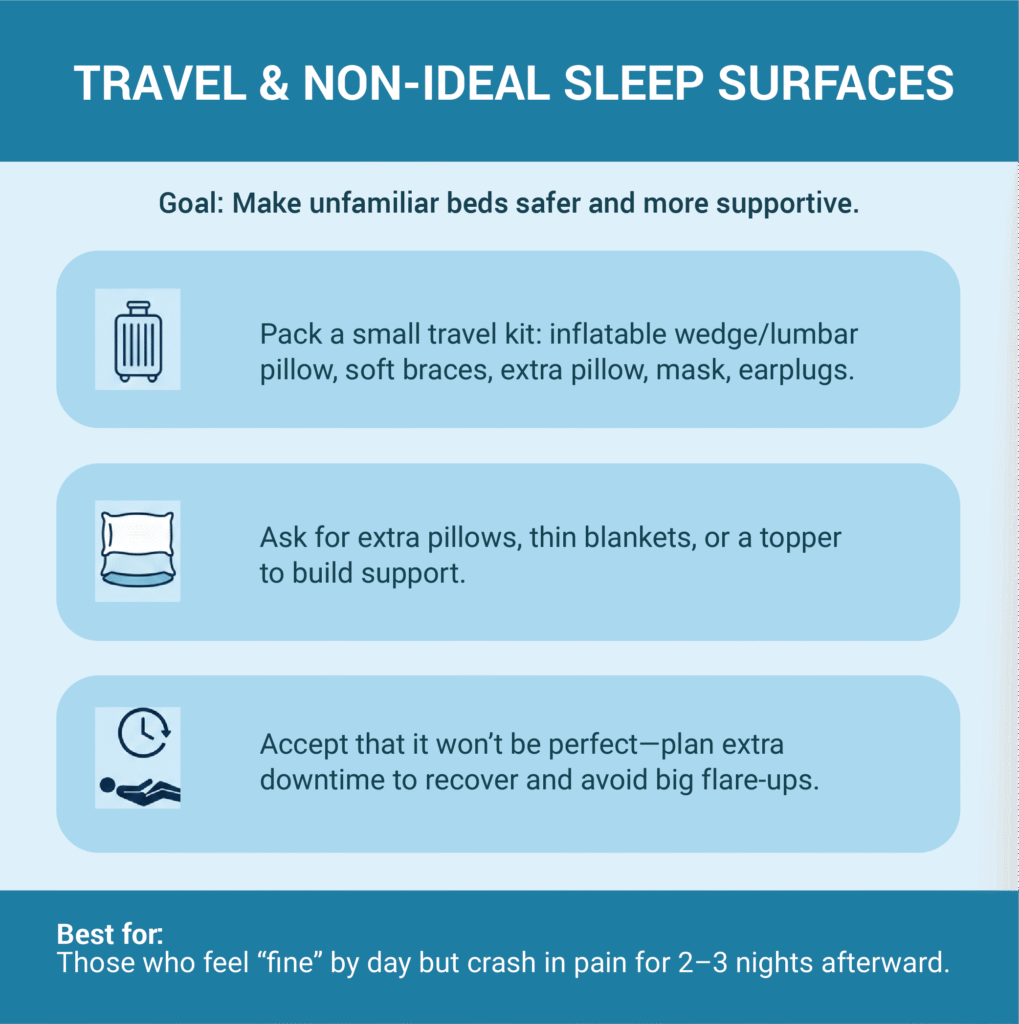
7. Travel and Non-Ideal Sleep Surfaces (On-the-Go Method)
Living with joint hypermobility should not stop you from traveling. While it may feel stressful to sleep in a new bed away from home, you can improvise and optimize its support easily.
Here is how you can customize the hotel bed, guest rooms, or a friend’s couch with limited resources:
- Prepare a travel kit with an inflatable wedge or lumbar pillow, soft braces, and one extra pillow. Include a sleep mask and silicone earplugs to help you wind down in a new environment.
- Do not hesitate to ask your host or hotel manager for extra blankets (lightweight), topper, and pillows to add medical support.
- You may not make it the perfect sleeping surface, so plan extra downtime to get adequate rest. This will prevent you from getting severe flare-ups that may sabotage your travel plans.
Best For: Frequent travellers, students in dorms, and anyone who lives away from home.
Notes: This temporary setup will keep your joints safe and supported to prevent nighttime inflammation.

Where Can I Find Hypermobility-Friendly Sleep Tools?
You don’t need a large budget to create a hypermobility-friendly supportive surface. You can get many tools online and in local stores that can help you get the right comfort for painful nights. These are listed in the table below:
| Tool Category | What to Look For | Best Use Case | Approx. Price (USD) |
| Body Pillows | Length 48-54″ (knee-to-ankle support) Medium-firm shredded foam Washable cover | “Stacking” limbs to prevent hip/shoulder collapse for side sleepers. | $18 – $50 |
| Mattress Toppers | Memory Foam: 2-3″ thick Latex: Bouncier and cooler. | Softening a too-hard mattress and adding contouring for joints. | Foam: $30 – $135 Latex: $49 – $370 |
| Cervical Pillows | Side Sleepers: Higher loft (46″) Back Sleepers: Lower dip (3-4″) | Stabilizing loose neck ligaments and preventing morning headaches. | $35 – $80 |
| Knee Bolsters | Hourglass shape (stays in place) Half-moon bolster (versatile) | Keeping hips neutral and flattening the lumbar spine when sleeping on the back. | $14 – $40 |
| Soft Braces | Seamless and compression-style sleeves (knee/wrist/ankle). Avoid rigid metal stays. | Preventing subluxations and providing sensory feedback to stop over-extension. | $10 – $25 (per sleeve) |
| Cooling Bedding | Bamboo viscose, Tencel, or 100% cotton percale Moisture-wicking fabric | Managing temperature regulation issues (POTS/dysautonomia). | $30 – $80 (sheet set) |
| Wedge Pillows | 7-10″ height memory foam top layer for comfort | Semi-reclined sleep for POTS, acid reflux, or rib/chest pain. | $30 – $90 |
| Heat/Cold Tools | Heat: Microwavable packs or electric pads.Cold: Gel packs (wrapped). | Heat for muscle spasms and cold for acute inflammation/subluxation. | $10 – $30 |
| Sensory Aids | Blackout curtains” cupped” eye masks (no eye pressure) silicone earplugs | Calming a sensitive nervous system and improving the sleep cycle. | $5 – $40 |
How Much Does It Cost to Set Up a Hypermobility-Friendly Bed?
To see improvements in your hypermobile joints, you need to determine what support you really need and how much it will cost you. Here is a quick breakdown of the setup cost, from basic to comprehensive:
Basic Low-Cost Setup ($30-$80)
For this, you will need:
- A full-body pillow ($18 – $50)
- An already used rolled towel
- A neck pillow (approx. $30)
Mid-Range Upgrade ($100-$250)
Then, determine which areas hurt you most and build a targeted support system:
- Medium-firm mattress topper, 2-3 inches ($30-$135)
- Quality body pillow ($50+)
- Knee Pillow ($14-$25)
Full Overhaul ($250-$2,000)
If you are using a 7+ year-old mattress, it will start sagging and create more pressure zones. You will have to replace it with a full overhaul:
- Medium-firm mattress ( $200- $1500)
- Latex mattress topper ($49 – $370)
- Extra support pillows ($20 – $100)
Note: Full overhaul is optional, and you don’t have to buy everything at once. You can invest in these components gradually.
Ongoing Costs
You must also consider ongoing costs to maintain your bedroom setup, such as:
- Pillows may flatten over the years of use, so replace them every 1-2 years.
- Replace mattress toppers every 3 to 5 years as they may compress over time.
- Replace braces, covers, and beddings as needed.
Best Value Strategy
To get the best value out of your setup:
- Build a support system by adding extra pillows and low-cost tools.
- See which parts hurt more than the others to add specialized pillows around those.
How Do I Adapt Common Sleep Positions Safely?
Let us compare side sleeping vs back sleeping for hypermobile people and how to tweak them to reduce morning pain:
Side Sleeping
This is the most preferred position for blood circulation, and it provides pressure relief to your lower back and reduces snoring. To align your spine and keep your shoulders and hips from collapsing:
- Make sure your ears, shoulders, and hips are placed in the same line.
- Add knee and ankle pillows to align your hip joints.
- Hug a body pillow to prevent your top shoulder from falling outwards.
Back Sleeping
By sleeping on your back, you distribute your body weight evenly on the surface. However, gravity can arch your lower back and make your knees hyperextend. For this:
- Use a neck pillow with a neutral curve and a thin to medium-height pillow to keep everything in line.
- Instead of sleeping with straight legs that strain your lumbar spine, use a pillow/towel under your knees to get a better angle.
Stomach Sleeping
This may be the worst sleeping position for hypermobile bodies, as it rotates your neck into an unnatural curve, impacting the cervical spine. Avoid this position if possible or modify it by:
- Use a low-loft pillow to flatten the angle of the neck.
- Place a thin pillow under your pelvis. This will correct the swayback in your lower spine.
Semi-Reclined Positions
Also known as zero-gravity position, it works best for those with autonomic dysfunction (POTS), acid reflux, or rib slippage. It lifts your torso to let gravity work for you in keeping your stomach acid down and opening your airways. For this:
- Use a wedge pillow to elevate the upper body from the hip line. This will make your shoulders stable.
- Use a high pillow under your knees to cradle your curves and reduce the pull of gravity on the joints.
Frequent Position Changers
If you are a combination sleeper and cannot stay in one position all night, follow these tips:
- Use a body pillow to create a barrier on both sides. This will keep you rolling into uncomfortable positions at night.
- Keep extra pillows and a rolled towel near your bed to grab them if you feel discomfort without waking up completely.
What’s the Average Time to Set Up a Supportive Sleep Routine?
It may seem like a daunting task to set up your sleep sanctuary with a complete overhaul. However, you don’t have to arrange everything all at once and take your time to build a pain-free support system. Here is the breakdown of estimated time:
Nightly Setup Time ( 1 to 5 minutes)
- It will take about 1 to 2 minutes to arrange extra pillows for a basic setup.
- Allow 3 to 5 minutes more for adding anti-subluxation support to place wedge pillows and soft braces.
Wind-Down Routine (10 to 20 minutes)
- Prepare a calming routine by doing gentle mobility drills.
- Incorporate breathing exercises to calm your nervous system.
The Adjustment Period (A few weeks or a month)
- If your sleeping posture is currently bad, trying to get into a better position will take a few weeks of practice.
- It may also take a few weeks to get accustomed to extra pillows and the support setup.
During Flare-Ups
- When starting with a new flare-up night protocol, your body will need extra time to adapt to it.
- Try new slight position improvements every few hours if you experience slight discomfort.
How Do I Keep My Sleep Setup Working Over Time?
The condition of hypermobility means your loose joints may shift from your hips to your neck. This dynamic nature requires you to keep your setup in check, in case it wears out. You can ensure regular maintenance by:
Regular Check-Ins
- If you notice sudden changes in your painful areas, adjust your support accordingly.
- Check your pillows if they have flattened ot if your topper is compressed. Replace them if they are giving you joint instability at night.
Maintenance Habits
- Create a cleaning routine to wash your topper, covers, and bedding regularly. This will keep allergens from interrupting your deep sleep.
- Rotate your mattress every 3 to 6 months to prevent indentations that can poorly align your body.
Updating Supports
- Replace your neck pillows if you notice cervical pain, and body/knee pillow if it is straining your lower body.
- Upgrade your mattress topper if your current mattress feels too firm.
- You can replace your mattress if it is old and showing body impressions.
Tracking Patterns
- Maintain a daily log using a pain diary and sleep tracking app. Keep a record of painful days and note down what you ate that day, when the pain was severe, and its level.
- Look for a pattern to make changes in your current routine.
- You can also show this log to your therapist to get data-based and tailored advice.
Emergency Backup Plan
- As hypermobility is a dynamic condition, keep spare support pillows and braces near your bed setup to get instant relief on painful nights.
Sleep Better with Hypermobility!
As a person with hypermobility, you may feel alone in this healing journey, which feels like a never-ending battle. However, by understanding how to sleep with hypermobility, you can improve your sleeping environment to manage your loose joints with the right strategy. This includes creating a pillow-based support setup for your full body, sleeping in an anti-subluxation position, and following a winding-down routine. Further, choose a medium-firm mattress and specialized pillows, and keep a flare-up kit ready to tackle painful nights. Make sure you pace your daytime activities and focus on not stressing out your joints.
Start by adding a neck pillow or a rolled towel under your knees, and gradually make slight changes in your lifestyle. Keep a record of your progress and share the log with your physio to get the best advice for your hypermobile joints.