When you purchase through our links, we may earn a commission at no extra cost to you. As an Amazon Associate, DreamSlumber earns from qualifying purchases. Learn more.
Key Takeaways:
– A medium-firm to firm mattress with slight cushioning helps keep your spine and neck aligned and reduces inflammation caused by AS during the night.
– Try to sleep flat on your back, but if it is uncomfortable, you can also sleep on your side. Use neck pillows to get the proper support to maintain your spine’s natural curve.
– Before going to bed, take a warm bath and stretch to reduce muscle stiffness and relax.
– Maintain a consistent sleeping routine to improve your body’s internal clock to target nighttime recovery and deep sleep.
Is the promise of a good night’s sleep starting to feel like a distant dream? When you’re living with ankylosing spondylitis, the nightly battle with back pain and spinal stiffness can leave you feeling exhausted before your head even hits the pillow. But what if a few expert tips can improve your sleep experience? Therefore, you must learn how to sleep with ankylosing spondylitis to wake up refreshed and with less pain. Ready to reclaim your nights? Scroll down to discover seven research-backed tips that will help you align your spine, soothe your joints, and get the restorative rest you deserve.
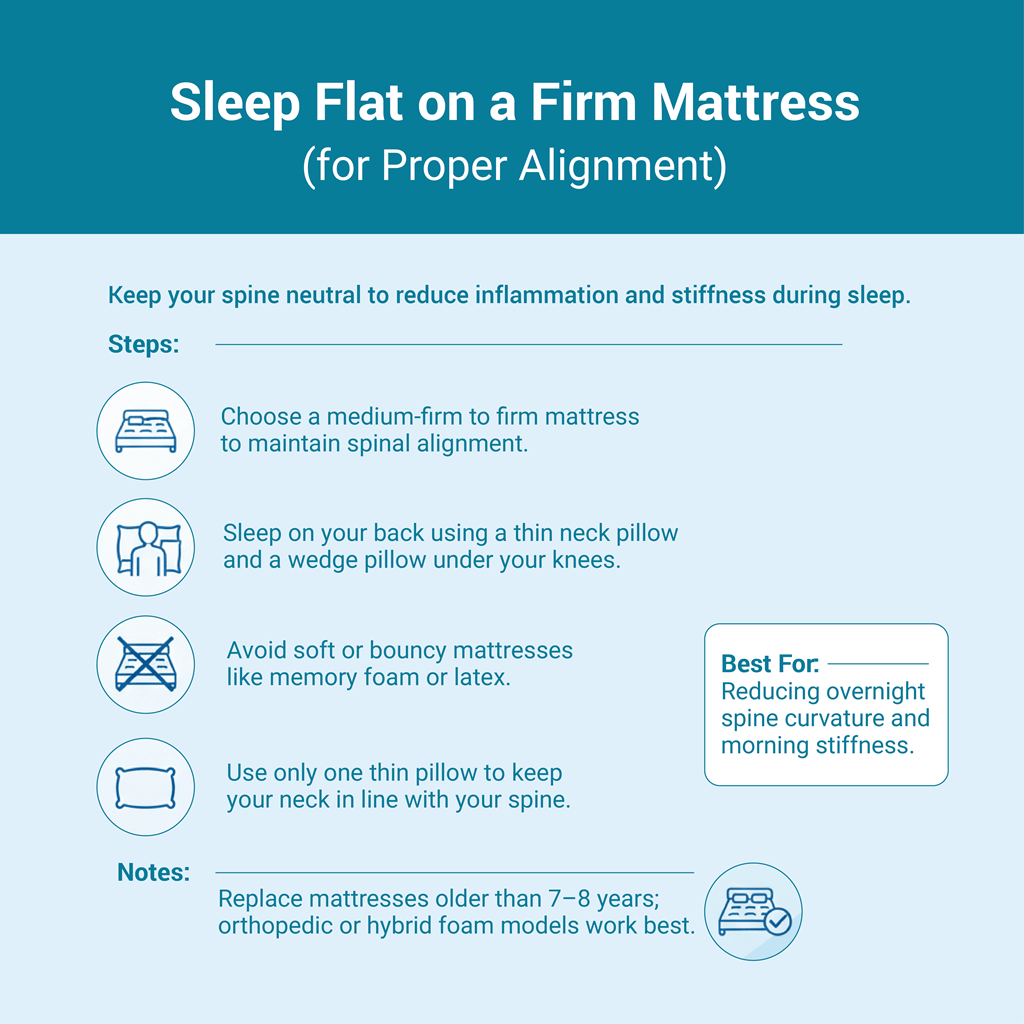
1. Sleep Flat on a Firm Mattress (for Proper Alignment)
If you are wondering how to reduce inflammatory back pain from ankylosing spondylitis, target sleeping on a surface that helps keep your spine neutral. Such a surface prevents your spine from sinking into unnatural positions, which can worsen inflammation and stiffness overnight. Here are the steps you can follow to get the maximum benefits of this sleep position:
Step-by-step:
- You can find a suitable mattress for ankylosing spondylitis by assessing its firmness level. A medium-firm to firm mattress works best to keep your spine straight.
- Try to sleep on your back and use a thin neck pillow and a wedge pillow under your knees for spine alignment in sleep.
- Avoid very soft mattresses, like pure memory foam and latex mattress options. These are bouncy, and your hips and shoulders may sink in too deeply.
- Do not use multiple pillows or thick ones under your head. Try to keep your neck neutral with your spine.
Best For: Reducing overnight spine curvature and managing stiffness symptoms.
Notes: If your mattress is more than 7-8 years old or shows visible sagging, consider replacing it with a new one. You can go for orthopedic or hybrid foam models that offer both support and comfort.
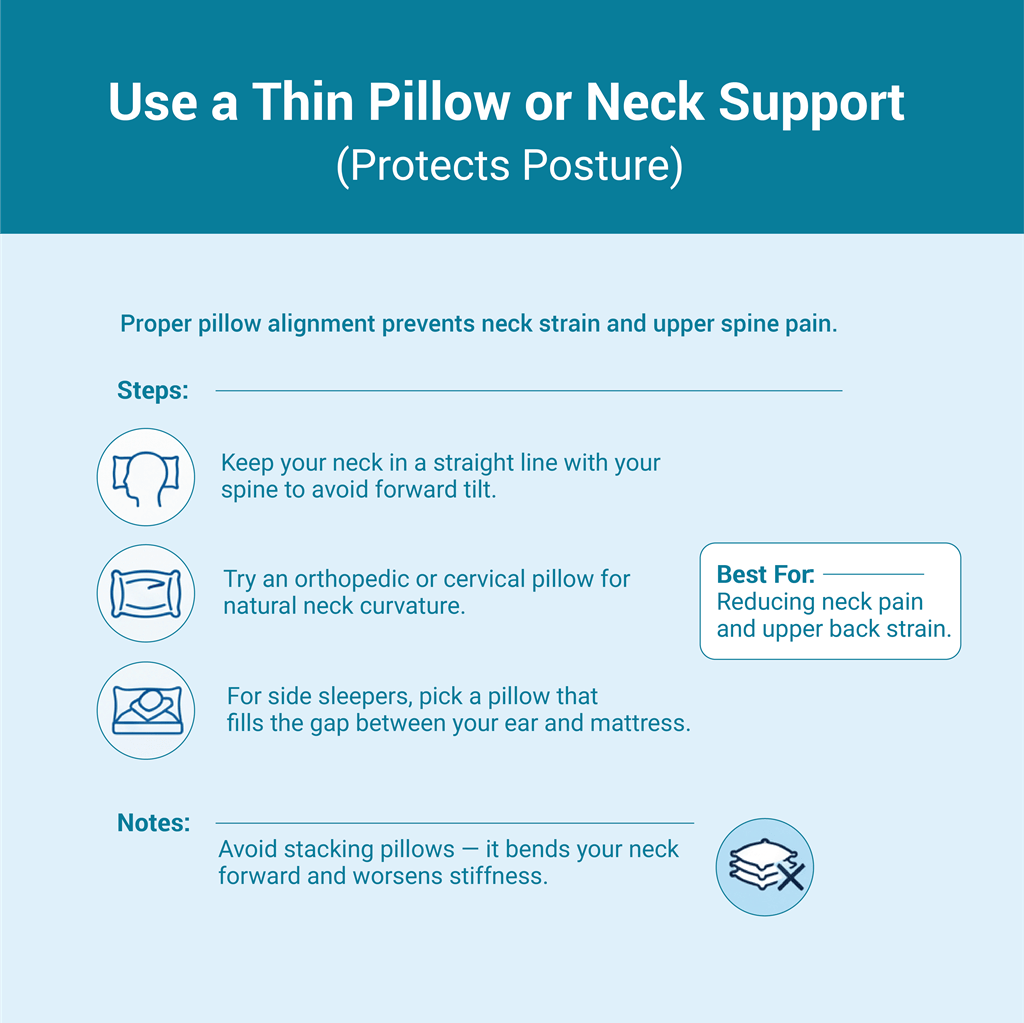
2. Use a Thin Pillow or Neck Support (Protects Posture)
For posture correction during sleep, see if your pillow supports your sleeping position. For someone with ankylosing spondylitis, neck pillow positioning helps maintain a neutral position. This is because it prevents your head from tilting forward or sideways, which can strain the upper spine. Consider these steps to manage nighttime back pain with the right sleep aids:
Step-by-step:
- Make sure your neck is in a straight line with your spine to prevent a forward head tilt. It can become permanent over time, harming the overall posture of the body.
- Use an orthopedic pillow or a cervical pillow designed to support the natural curve of the neck for back sleepers.
- If you have to sleep on your side, select a pillow that fills the space between your ear and the mattress perfectly. This will prevent your head from dropping.
Best For: Reducing neck pain and upper back strain.
Notes: Avoid stacking multiple pillows. This forces your neck into a flexed position and can worsen stiffness and pain.
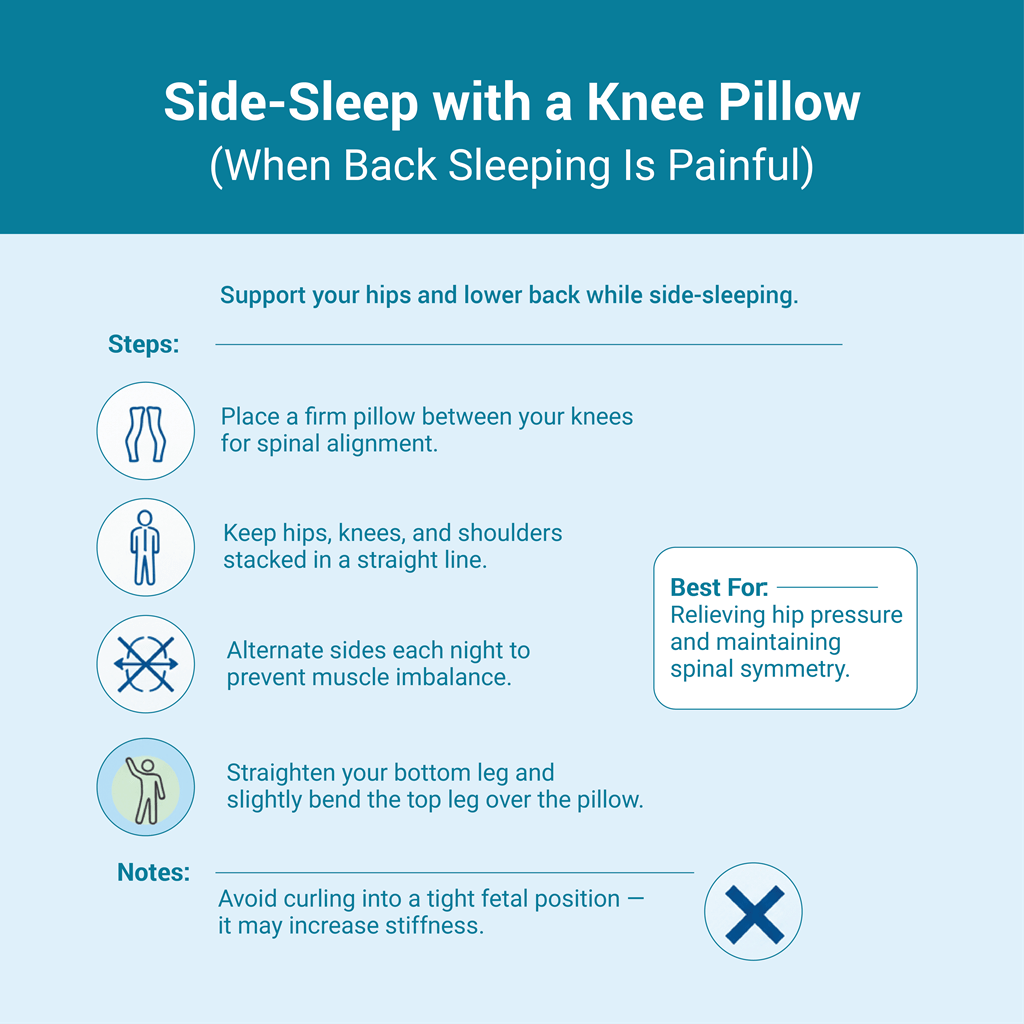
3. Side-Sleep with a Knee Pillow (When Back Sleeping Is Painful)
Although the back sleeping position is considered ideal, it may cause severe pain and stiffness. If you find side sleeping more comfortable, use a pillow between the knees for lumbar support and hip alignment. Let us discuss in detail to answer how to sleep with ankylosing spondylitis without pain:
Step-by-step:
- Sleep on your side and place a firm pillow between your knees. This will keep your upper leg from sliding forward and twisting your lower back.
- Keep your hips, knees, and shoulders stacked in a straight line.
- Try to alternate sides each night to prevent muscle imbalances.
- Keep your bottom leg straight most of the time while slightly bending your upper leg over the pillow. This will give you a stable side sleeping posture.
Best For: Relieving pressure points at the hips and maintaining spinal symmetry when back sleeping isn’t an option.
Notes: Avoid curling into a tight fetal position. This rounded posture can lead to spine fusion and increased stiffness.
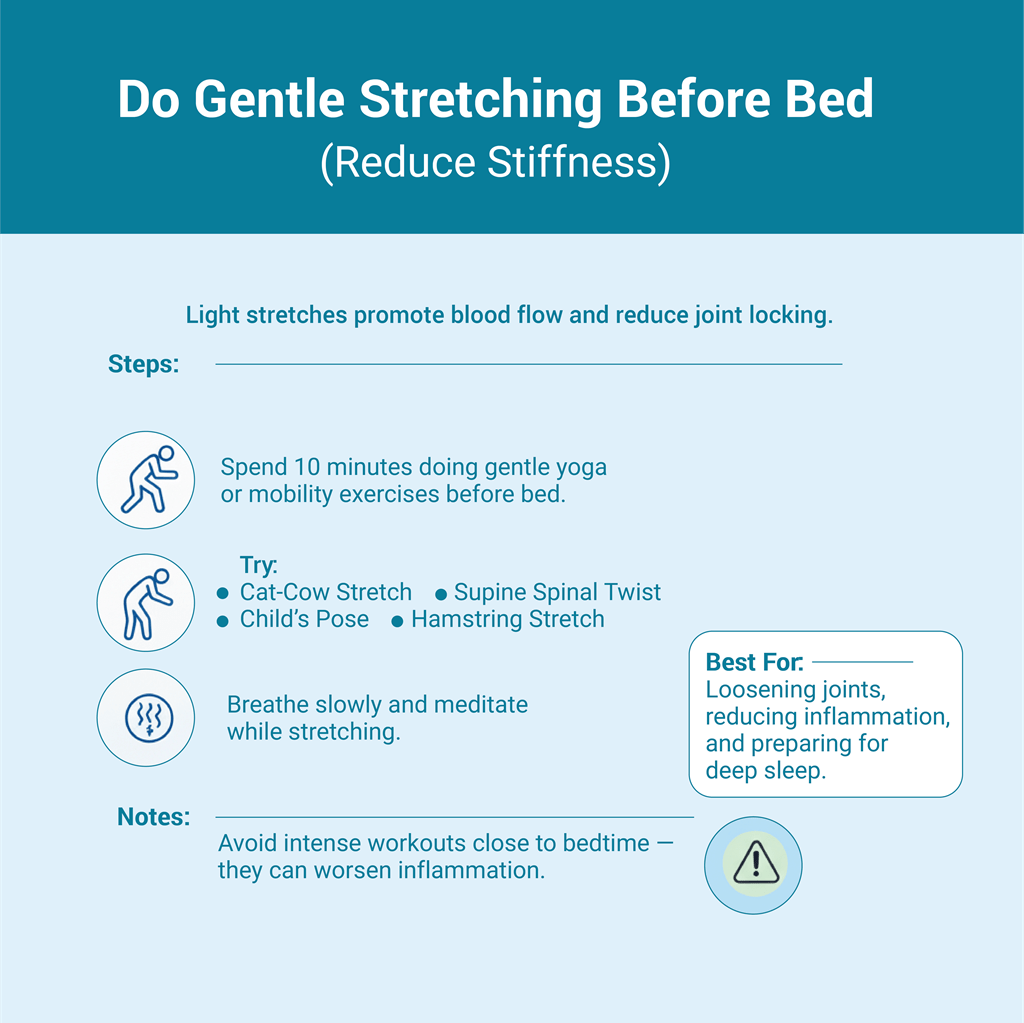
4. Do Gentle Stretching Before Bed (Reduce Stiffness)
While managing the symptoms of sleep disorders like spondylitis, it may seem impossible to engage in any kind of exercise due to chronic pain. However, staying active is very important as it promotes better blood circulation and prevents your joints from getting locked. Follow these steps on how to relieve back stiffness before sleep with AS:
Step-by-step:
- Give daily at least 10 minutes to mobility exercises and gentle yoga before sleep. Let us discuss how to stretch before bed for ankylosing spondylitis:
- Cat-Cow Stretch: Arch and round your back alternatively for better flexibility of the spine.
- Supine Spinal Twist: Get down on your back and drop your knees to each side while keeping your shoulders facing the ceiling.
- Child’s Pose: Lie down with your hips back on your heels and your forehead on the floor or a pillow to stretch your back.
- Hamstring Stretches: Stretch your hamstrings by touching your toes without bending the knees.
- Meditate before sleeping and practice slow breathing while stretching to calm down your nerves and brain.
Best For: Loosening joints, reducing inflammation, and easing the body to prepare for slumber.
Notes: Avoid any intense or high-impact workouts close to bedtime. These intense exercises can trigger inflammation, making it harder to fall asleep with more sleep disturbances.
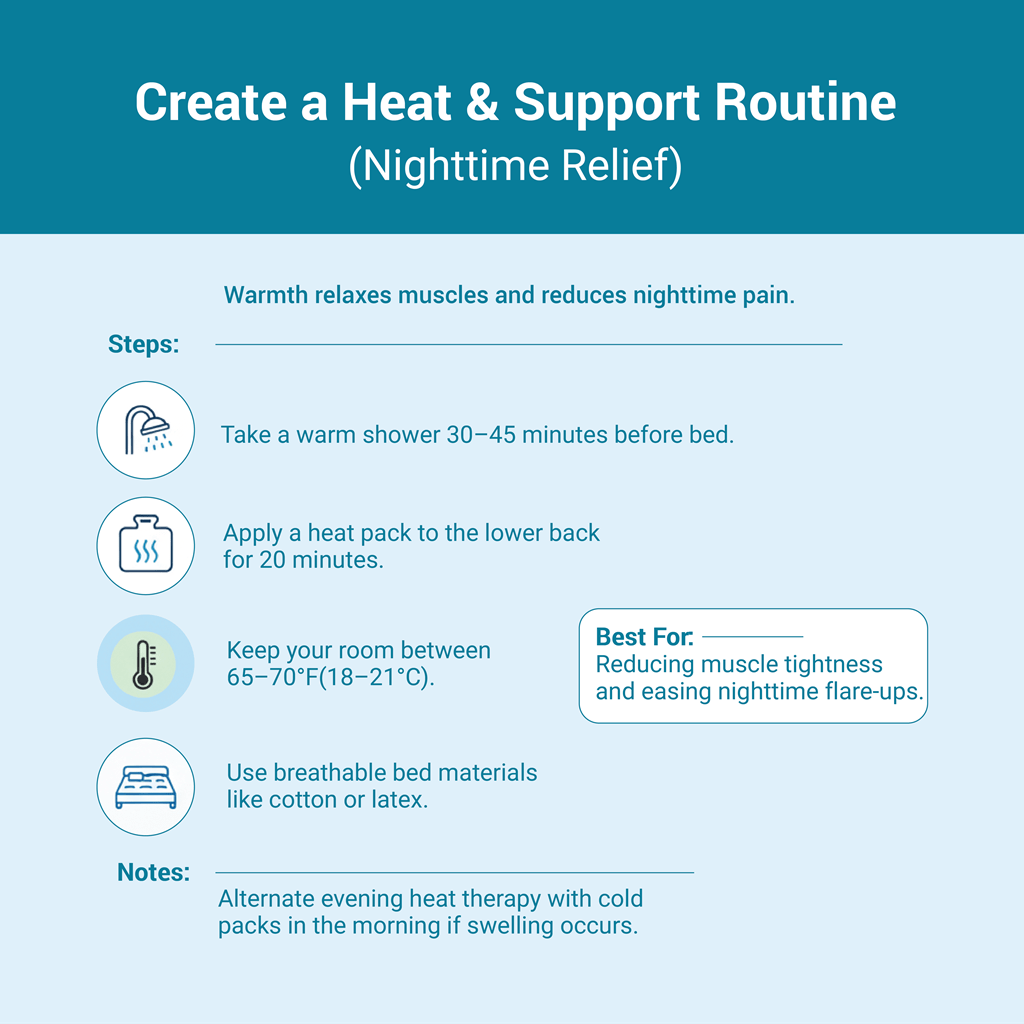
5. Create a Heat and Support Routine (Nighttime Relief)
To answer your question, how to sleep through the night with ankylosing spondylitis, we recommend applying warmth to stiff muscles before bed. This is an easy method to increase the blood flow to painful parts of the body and reduce the tightening of the muscles.
Heat therapy enhances the blood flow to painful areas, relaxes muscle tension, and reduces spasms. Follow these steps for nighttime inflammatory back pain management and muscle spasm reduction with heat therapy:
Step-by-step:
- Take a warm shower or bath 30 to 45 minutes before you plan to go to bed, as a part of your ankylosing spondylitis pain relief routine. This will ease the joint stiffness and prepare your body for deep sleep.
- Use a heat pack or heating pad on your lower back for 20 minutes at a time.
- Keep your bedroom at a cool temperature between 65 and 70°F (18 to 21°C). This makes sure you sleep cooler and manages nighttime inflammation.
- Invest in a bedsheet with breathable materials such as organic cotton or latex for better temperature regulation at night.
Best For: Loosening tight muscles and easing flare-ups before and during sleep.
Notes: If you experience swelling in the morning, you can alternate heat therapy in the evening with cold therapy (ice packs) in the morning.
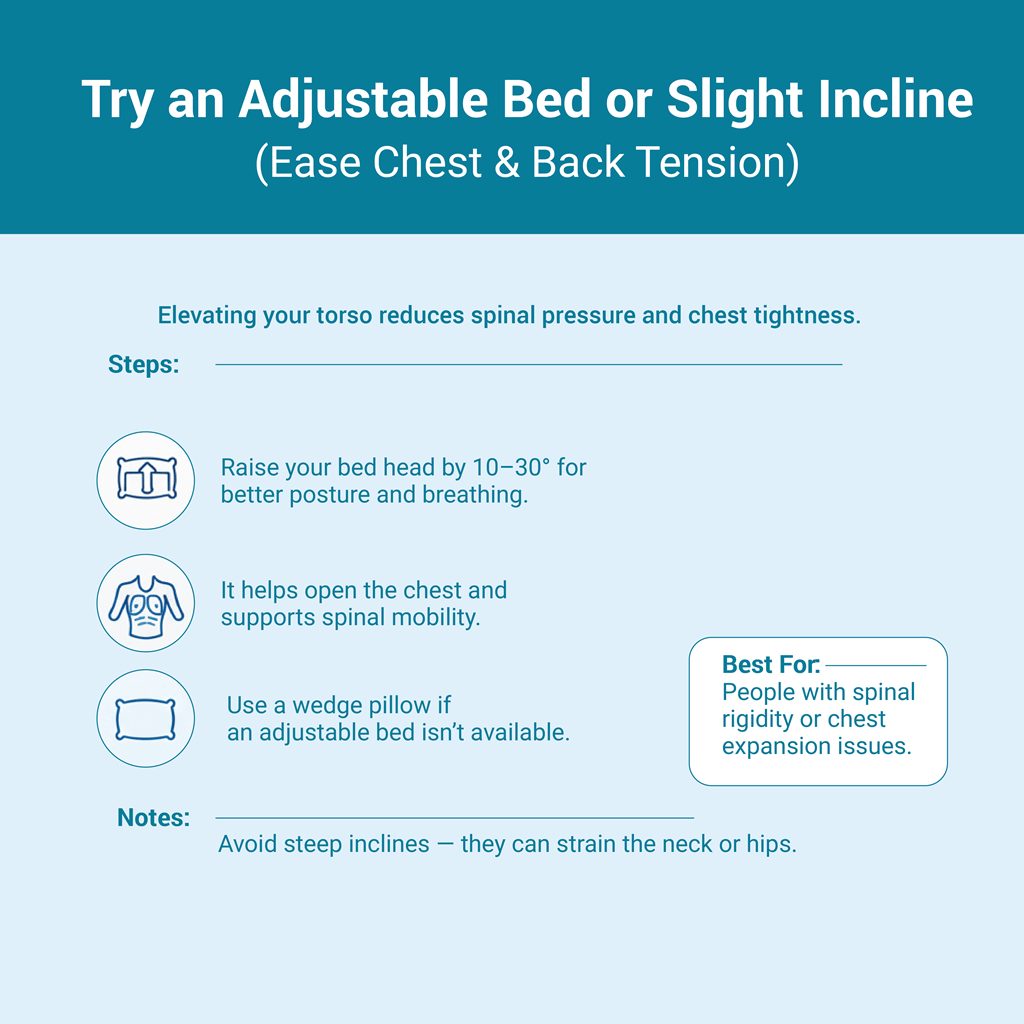
6. Try an Adjustable Bed or Slight Incline (Ease Chest and Back Tension)
An adjustable bed can work wonders for patients with ankylosing spondylitis. When you choose an adjustable bed over a regular bed, the zero gravity preset lifts the torso to reduce pressure on the lower back. Let us discuss steps on how to support your neck and spine with ankylosing spondylitis by using adjustable frames to have quality sleep at night:
Step-by-step
- Adjust the head of your bed to an inclination between 10 and 30 degrees for the best sleep ergonomics. This position can help take the strain off your spine and help you maintain good sleeping posture with improved sleep quality.
- It helps open up your chest if ankylosing spondylitis has affected your rib cage or if you struggle with chest expansion.
- These beds can be expensive for some sleepers. Alternatively, you can place a wedge pillow under your mattress to lift your body.
Best For: People with spinal mobility challenges, chest tightness, or those who seek relief from nighttime back pain to improve their overall quality of life.
Notes: Be careful not to elevate your upper body at too steep an angle, as this can put unnecessary strain on your neck or hips and may worsen discomfort.
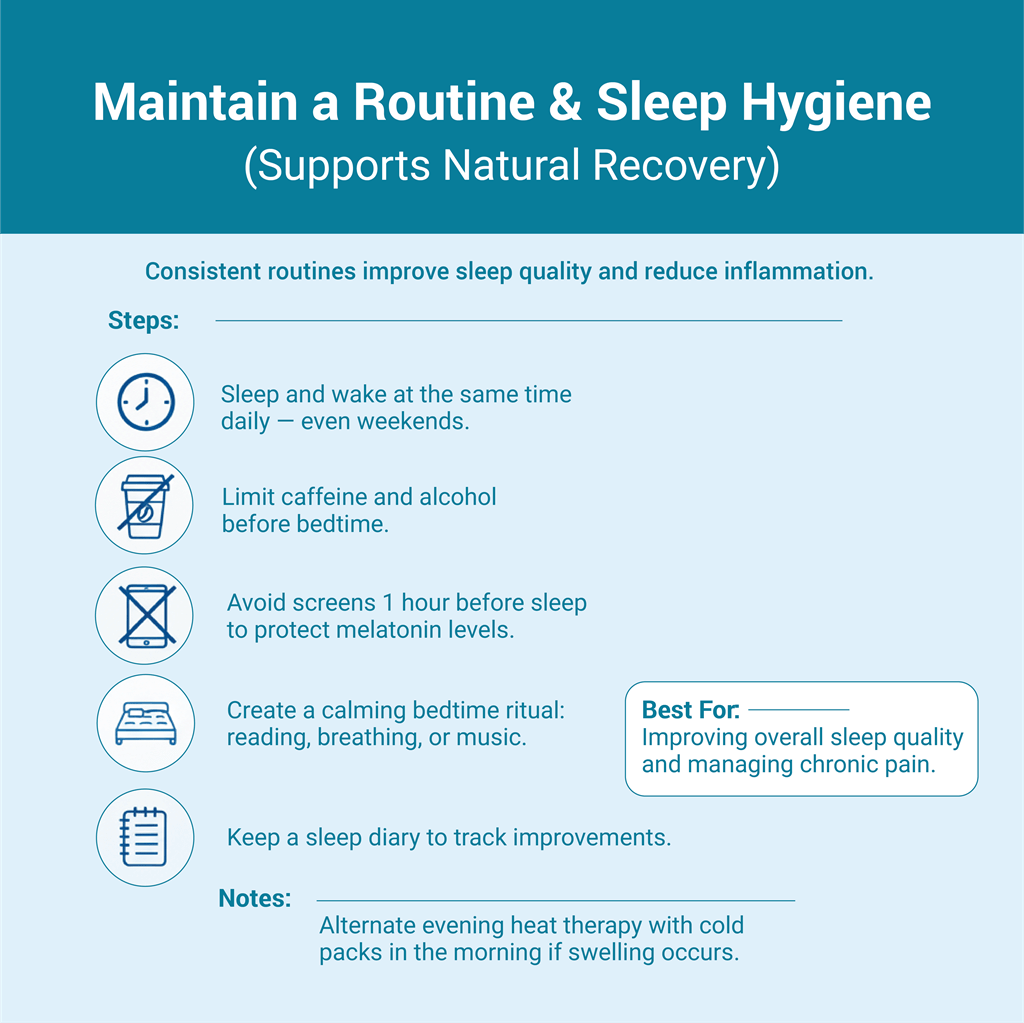
7. Maintain a Routine and Sleep Hygiene for Chronic Pain (Supports Natural Recovery)
To manage sleep disorders like ankylosing spondylitis, maintaining consistent sleep cycles with an effective routine and a comfortable sleep sanctuary goes a long way. Patients with ankylosing spondylitis are also prone to sleep apnea. Therefore, a good night’s sleep routine is extremely important. Here is how you can maintain it:
Step-by-step:
- Follow a daily timetable that helps you go to bed and wake up at the same time each day, even on weekends.
- Cut caffeine consumption and avoid having it post-noon or evening. Take light meals at night and avoid having alcohol close to your sleeping time.
- The blue light from phones, tablets, and computers can disrupt your body’s natural production of melatonin (a hormone that promotes sleep). Try to avoid using your phone at least an hour before going to bed and after waking up.
- Make a winding-down pre-bedtime routine. This can include reading, meditation, breathing exercises, or listening to slow music.
- You can also keep a sleep diary to have a record of the changes you feel after following effective measures.
Best For: Improving the sleep quality and reducing inflammation.
Notes: Try to sleep for at least seven to nine hours each night. Focus on creating an environment and routine that supports restorative rest.
Other Important Tips:
Best Sleeping Positions for Ankylosing Spondylitis
- Back Sleeping (ideal)
Back sleeping position makes sure your weight is distributed evenly, reducing pressure on the spine and joints. You can also keep a pillow under your knees and use a thin pillow under your head to keep your neck and spine in a straight line.
- Side Sleeping (with support)
When sleeping on your side, keep a firm pillow between your knees. This will align your hips and pelvis and keep your upper leg from pulling the spine out of position. Use a pillow that is thick and fills the space between your shoulder and ear.
- Avoid Stomach Sleeping
This position may strain your neck and back. It may also worsen the stiffness in your spine over time. Sleeping on your stomach forces your head to turn to one side, twisting your neck unnaturally for hours. It can also flatten the spine’s natural curve, increasing lower back discomfort near the sacroiliac joint.
How To Choose a Mattress for Ankylosing Spondylitis
- Look For A Firm Yet Cushioned Surface
A medium-firm to firm mattress support keeps your spine in place and neutrally aligned. However, your mattress must have slight cushioning to prevent pressure points.
- Memory Foam Vs Latex Mattress
Memory foam conforms to your body’s shape. This can help ease your joint pain and pressure on your shoulders and hips. On the other hand, latex mattresses have a responsive feel and are cooler than memory foam variants. You can also invest in memory foam hybrids to get the most out of your mattress.
- Replace Old Mattresses
A good-quality mattress can last you for around 5 to 10 years. This longevity depends on the frequency of use and level of wear and tear. If it shows visible sagging, it is best to replace your mattress for better symptom management.
How to Prevent Flare-Ups While Sleeping with AS
- Orthopedic And Cervical Pillows
These pillows are specifically designed to support the natural curves of your neck. This further helps in keeping your head in a straight line with your spine. Use a thin and firm pillow as a back sleeper, or go for a thicker pillow to support your body while sleeping on your side.
- Hypoallergenic And Washable Covers
If you want to gain nightly wellness benefits, use a washable and hypoallergenic cover. This will reduce the exposure to dust mites and allergens, which may prove to be a hurdle during restorative recovery.
- Avoid High Pillows
Avoid stacking multiple pillows or using thick ones that may push your neck into a bad position. Elevated pillows can bend your neck forward, adding unnecessary pressure to your cervical spine. Choose a pillow height that keeps your neck aligned with your upper back for better comfort and reduced flare-ups.
Best Tips for Stretching and Mobility
- Use A Foam Roller Lightly: Keep a foam roller on the ground and lie on it horizontally to stretch your chest and mobilize your thoracic spine. You can also roll along stiff muscles in your back, glutes, and hamstrings.
- Physical Therapy Exercises: Hire a physiotherapist who can design an exercise routine with physical activities that cater to your health goals and helps avoid any functional limitations at a later stage
How to Create a Bedtime Routine for Ankylosing Spondylitis:
- Consistent Bedtime: Make sure you go to bed and wake up at the same time daily to maintain your circadian rhythm.
- Screen-free Wind-down: Turn off all devices one hour before bed to avoid blue light exposure.
- Dark and Cool Room: Use blackout curtains, earplugs, or a white noise machine to create a calming nighttime atmosphere.

Best Bedding and Tools for Ankylosing Spondylitis
To help you manage your pain symptoms during AS, you may need some effective accessories and tools to improve your sleep quality. The table below lists important add-ons with their price range to act as a final checklist:
| Accessories and Tools | What does it do? | Price Range (USD) |
| Medium-Firm Orthopedic Mattress | Supports spinal alignment | $400-$1,200 |
| Cervical/Orthopedic Pillow | Maintains neck posture | $30-$80 |
| Knee Pillow | Aligns hips for side sleepers | $15-$30 |
| Heating Pad | Relaxes stiff muscles | $20-$50 |
| Breathable Sheets | Regulates temperature | $25-$70 |
| Lumbar Support Cushion | Supports lower back curve | $20-$40 |
| Adjustable Bed Frame | Eases chest/back tension | $200-$800 |
| Lightweight Comforter | Prevents overheating | $30-$90 |
| Cooling Mattress Topper | Reduces night sweats | $50-$120 |
| Foam Roller/Stretch Band | Aids in gentle stretching | $15-$40 |

Frequently Asked Qusetions
How Much Does It Cost to Improve Sleep Comfort?
For a good night’s rest for AS symptoms, you don’t need a huge budget and expensive tools. You can use DIY methods like pillows and heat pads, costing around only $50-$150. If you require a complete ergonomic upgrade for your bedroom, a new mattress and bedding can cost you approximately $400-$1,000. If your AS pain and stiffness are severe, you may require professional help, costing $50-$150 per session.
How Do Different Sleep Positions Affect AS?
The position you sleep in plays a huge role in managing and easing your AS symptoms. Sleeping on your back is considered ideal for maintaining proper spinal alignment. If this is not possible, you can sleep on your side by using pillows between your knees. Many medical experts advise against stomach sleeping, as it may cause flare-ups. You can also invest in an adjustable bed to keep your torso inclined for chest expansion and airway management.
How Long Does It Take to See Improvement?
If you follow all the best practices consistently, you will witness a slight reduction in stiffness within just 3 to 5 nights. This includes sleeping on a comfortable surface in a neutral posture and undergoing heat therapy. Further, you will experience noticeable pain relief within 2 to 3 weeks with daily stretching exercises. For a long-term improvement that lasts, you may take 1 to 2 months for symptom reduction.
How Do I Prevent Pain and Morning Stiffness in Ankylosing Spondylitis?
The prevention of pain and stiffness during AS requires you to follow a daily nighttime and morning routine. Before bed, practice breathing exercises to prepare your body and mind for deep and restorative slumber. Invest in a good quality and firm mattress with targeted cushioning for the best support. Sleep on your back or side and use neck pillows to maintain a neutral sleeping posture. During the day, practice stretching exercises and yoga. Also, make sure you maintain a proper posture and stay active during the day to prevent your joints from locking.
Sleep Better with Ankylosing Spondylitis!
Most of the popular tips on how to sleep with ankylosing spondylitis will tell you to create a sleep environment that supports your spinal health. Start by investing in a firm or medium-firm mattress to relieve your pressure points and use a thin pillow to prevent neck flexion. These basic elements work with ankylosing spondylitis sleeping positions to create a neutral posture, which prevents stiffness.
If you are a side sleeper, use a knee pillow to support your hips and lower back. Prepare your body for rest by stretching or applying heat to soothe inflammation and ease muscle tension. By practicing these back pain relief tips daily with a consistent sleep schedule, you improve your body’s internal clock for stable recovery overnight.
Ultimately, finding perfect strategies for you may require some patience and experimentation, so listen to what your body needs. Take control of your sleep by incorporating these tips for a more comfortable and active life with ankylosing spondylitis!